Wednesday, October 24, 2007

US War Could Cost $2.4 Trillion by 2017


Economic advisors to Congress warn the cost of U.S.-led war on terror could exceed $2 trillion over the next 10 years. Much of that funding comes from money borrowed overseas, and the non-partisan Congressional Budget Office says it would be best to start paying for the war now and not let the debt grow. From Washington, Margaret Besheer has more @ Voice of America.
"The truth is that this administration from its original $50 billion estimate on the cost of the war in Iraq right through the estimates being made outside this committee today, consistently low-balls, misstates to the American people the true cost of the dollars, and of course, the true cost in blood that we are paying for this go-it-alone misadventure," said Democratic Congressman Lloyd Doggett of Texas.

The White House brushed off the estimate as speculation, but admitted that it did not know how much the war would cost. Read on @ Yahoo News

Bush Stands by Plan for Missile Defenses


President Bush on Tuesday strongly defended plans to build missile defenses in Europe, arguing that Iran posed an urgent threat to some NATO allies. He also chided the Democratic-controlled Congress for cutting spending that he called “vital to the security of America.”

“The need for missile defense in Europe is real, and I believe it is urgent,” Mr. Bush said, speaking at the National Defense University here. “Iran is pursuing the technology that could be used to produce nuclear weapons and ballistic missiles of increasing range that could deliver them.”

Mr. Bush’s remarks — part of a broad defense of the administration’s national security strategy after the Sept. 11, 2001, attacks — came only 11 days after his secretaries of state and defense went to Moscow and discussed ways to ease Russia’s concerns over the deployment of missile defenses in Poland and the Czech Republic.

While Mr. Bush invited Russian cooperation, he also made it clear that the administration intended to proceed with building missile sites as part of a plan to deploy the interceptor missiles in several years. His tone appeared more hawkish than that of Defense Secretary Robert M. Gates, who had said earlier in the day in Prague that while the United States wanted the deployment to move forward, the missiles might not be activated immediately after being deployed.

“We have not fully developed this proposal,” Mr. Gates said, appearing with the Czech prime minister, Mirek Topolanek, “but the idea was we would go forward with the negotiations, we would complete the negotiations, we would develop the sites, build the sites, but perhaps delay activating them until there was concrete proof of the threat from Iran.”

At the meetings in Moscow, on Oct. 12 and 13, the Russians called for the United States to freeze the planned deployment of the missiles in Poland and a radar station in the Czech Republic. While Mr. Gates and Secretary of State Condoleezza Rice ruled that out, the two countries did agree to share information about potential threats from Iran.

Mr. Bush would like to make missile defense a defining legacy of his presidency, though critics say the initial system, with a limited number of missile interceptors in Alaska and California, remains unproven. Missile defense has been a core of Republican ideology since Ronald Reagan proposed what came to be known as the “Star Wars” program in 1983, and it remains hugely popular among the Republican candidates vying to succeed Mr. Bush. Read more @ New York Times

Cost of California Wildfires Is More than $1 Billion


Wildfires in Southern California have caused at least $1 billion in damage in San Diego County alone — and that figure is expected to rise, officials warned Wednesday.

In just four days, the blazes have burned 410,000 acres and forced at least 500,000 people to flee their homes — the largest evacuation in state history.

Homeland Security Secretary Michael Chertoff told NPR that 2,100 homes and buildings have been substantially damaged.

So far, the worst damage is in San Diego County. Ron Lane, San Diego County's director of emergency services, said the fires will be costly.

"Clearly, this is going to be a $1 billion or more disaster," he said.

President Bush set the wheels in motion for California to receive federal aid Wednesday, signing a major disaster declaration.

"Americans all across this land care deeply about them," the president said after a Cabinet meeting convened to coordinate federal relief efforts. "We're concerned about their safety. We're concerned about their property."

The fierce Santa Ana winds, sometimes gusting to 70 mph, have fanned the blazes for days, but forecasters now predict they will begin to die down. Read on @ National Public Radio

Tuesday, October 23, 2007

Candidate Hillary: the GOP's dream


The most interesting thing to come out of the umpteenth Republican debate Sunday is confirmation that the GOP is dying to run against Hillary Clinton. Like Don Rickles flaying a heckler, each candidate whacked at Clinton as if she were a pants-suited piñata. When they were done with their one-liners, former Arkansas Gov. Mike Huckabee deadpanned: "Look, I like to be funny. There's nothing funny about Hillary Clinton being president."

No, but there's something deeply advantageous about having her as an opponent. So far, the commentary about the Republican offensive against Hillary has focused mostly on how it reflects poorly on the GOP (those Clinton-hating wing nuts are at it again!). What's not been fully grasped is how Hillary gives the GOP its best chance at being the party of change.

The question that remains is whether the critical 5% to 10% of swing voters will think Hillary Clinton represents the sort of change they want.

What most independents and swing voters want is an end to the acrimony and bitterness in Washington -- and a candidate they like. Whether that's right or not is irrelevant. That's what they want.

Which Democratic candidate would be most likely to give those voters what they want? Not Hillary, it's safe to say.


Right now, during the primaries, she can get away with boasting about her tenure in the Clinton administration. Party activists are drunk with Clinton nostalgia. On the stump in Iowa, Bill Clinton responded to the claim that Hillary was "yesterday's news" by saying, yeah, but "yesterday's news was pretty good."

If Democrats could get out of their bubble, it might dawn on them that virtually all of their other candidates are better positioned to run as champions of change. Hillary Clinton has shrewdly tried to trim the differences between her and the competition by claiming that any of them would be better than George W. Bush. From a liberal perspective, that's obviously true. But that perspective won't necessarily dominate come next fall, particularly if conditions in Iraq continue to improve.

Is it really so obvious that, say, Rudy Giuliani or Mitt Romney represent "change" less than the ultimate Clinton retread, complete with Bill as "first gentleman?" That's how Democrats are betting right now, and they may be bitterly disappointed -- again -- when it comes time to collect.

Read on with Jonah Goldberg @ Los Angeles Times

Make Walls, Not War


IN a surge of realism, the Senate has voted 75-23 to acknowledge that Iraq has broken up and cannot be put back together. The measure, co-sponsored by Joe Biden, a Democratic presidential candidate, and Sam Brownback, Republican of Kansas, supports a plan for Iraq to become a loose confederation of three regions — a Kurdish area in the north, a Shiite region in the south and a Sunni enclave in the center — with the national government in Baghdad having few powers other than to manage the equitable distribution of oil revenues.

While the nonbinding measure provoked strong reactions in Iraq and from the Bush administration, it actually called for exactly what Iraq’s Constitution already provides — and what is irrevocably becoming the reality on the ground. Read more of Peter W. Galbraith @ NYT

Sunday, October 21, 2007

Photo of the Day

Obama's next move after 2008...


A few years as governor would boost senator's presidential aspirations
A few random observations for a Sunday morning. Not a single vote has been cast, but the political pundits are talking about the inevitability of a Hillary Clinton nomination as the Democratic presidential candidate. Let's forgo a debate on her various vulnerabilities, Barack Obama's celebrated strengths and the many uncertainties of primary politics, and accept it as true for the moment. The question then becomes: What's next for Obama?

He could return to full-time work in the U.S. Senate. But history tells us that the longer a politician stays in the Senate, the bigger resume of votes he accumulates that can be turned against him in a national political campaign. Even if Clinton were elected president, the fact remains that Capitol Hill has not been as successful a launching pad for presidential aspirations as state capitals.

So perhaps Obama might think about directing his attention toward Springfield and run for governor in 2010. Gov. Blagojevich's scorched-earth policy there has alienated Democratic and Republican legislators alike, and a couple more years of the chaos we witnessed this year will have voters eager to embrace a leader at least capable of working harmoniously with his own party.

A few years running the state would give Obama the kind of executive seasoning that the electorate likes to see in candidates for president. It's a lack of experience that has been perceived as the Achilles' heel of his White House bid.

Suicide Is Not Painless


IT was one of those stories lost in the newspaper’s inside pages. Last week a man you’ve never heard of — Charles D. Riechers, 47, the second-highest-ranking procurement officer in the United States Air Force — killed himself by running his car’s engine in his suburban Virginia garage.

Mr. Riechers’s suicide occurred just two weeks after his appearance in a front-page exposé in The Washington Post. The Post reported that the Air Force had asked a defense contractor, Commonwealth Research Institute, to give him a job with no known duties while he waited for official clearance for his new Pentagon assignment. Mr. Riechers, a decorated Air Force officer earlier in his career, told The Post: “I really didn’t do anything for C.R.I. I got a paycheck from them.” The question, of course, was whether the contractor might expect favors in return once he arrived at the Pentagon last January.

Set against the epic corruption that has defined the war in Iraq, Mr. Riechers’s tragic tale is but a passing anecdote, his infraction at most a misdemeanor. The $26,788 he received for two months in a non-job doesn’t rise even to a rounding error in the Iraq-Afghanistan money pit. So far some $6 billion worth of contracts are being investigated for waste and fraud, however slowly, by the Pentagon and the Justice Department. That doesn’t include the unaccounted-for piles of cash, some $9 billion in Iraqi funds, that vanished during L. Paul Bremer’s short but disastrous reign in the Green Zone. Yet Mr. Riechers, not the first suicide connected to the war’s corruption scandals, is a window into the culture of the whole debacle.

Read more of Frank Rich @ New York Times

Louisiana elects first nonwhite governor since Reconstruction


U.S. Rep. Bobby Jindal became the nation's youngest governor and the first nonwhite to hold post in Louisiana since Reconstruction when he carried more than half the vote to defeat 11 opponents.

Jindal, the Republican 36-year-old son of Indian immigrants, had 53 percent with 625,036 votes with about 92 percent of the vote tallied. It was more than enough to win Saturday's election outright and avoid a November 17 runoff.

"My mom and dad came to this country in pursuit of the American dream. And guess what happened. They found the American Dream to be alive and well right here in Louisiana," he said to cheers and applause at his victory party.

His nearest competitors: Democrat Walter Boasso with 208,690 votes or 18 percent; Independent John Georges had 167,477 votes or 14 percent; Democrat Foster Campbell had 151,101 or 13 percent. Eight candidates divided the rest.

"I'm asking all of our supporters to get behind our new governor," Georges said in a concession speech.

The Oxford-educated Jindal had lost the governor's race four years ago to Gov. Kathleen Blanco. He won a congressional seat in conservative suburban New Orleans a year later but was widely believed to have his eye on the governor's mansion. Read on @ CNN Politics

Saturday, October 20, 2007

US navy 'plans W Africa exercise'


The Gulf of Guinea has significant strategic importance because a large percentage of U.S. oil imports flow through it...
It provides a good example of what the newly established U.S. Africa Command is about as it relates to helping our partner nations on the continent of Africa build their capacity to better govern their spaces, to have more effect in providing for the security of their people, as well as doing the things that are important in assuring the development of the continent in ways that promote increased globalization of their economies as well as the development of their societies for the betterment of their people," said the general. Read more @ Voice of America

Wednesday, October 17, 2007

Poll: Black support helps Clinton extend lead


Sen. Hillary Clinton's lead over Sen. Barack Obama, her chief rival for the Democratic presidential nomination, is growing among African-American voters who are registered Democrats, and particularly among black women, a poll said Wednesday.
Among black registered Democrats overall, Clinton had a 57 percent to 33 percent lead over Obama.

That's up from 53 percent for Clinton and 36 percent for Obama in a poll carried out in April.

The 26-point difference between black women and men underscores the fact that the nation's vote is divided not only by race, but also by gender, said CNN political analyst Bill Schneider. "Black women don't just vote their black identity," he said. "They also vote their identity as women."

Among white registered Democrats, Clinton drew 49 percent support, versus 18 percent for Obama and 17 percent for former Sen. John Edwards of North Carolina, the latest poll found.

The question had a sampling error of plus-or-minus 6.5 percentage points.
Click HERE for the four charts. To read more from CNN...

Friday, October 12, 2007

Photo of the Day


Fog creates a challenge for golfers at an international tournament in Virginia Water, Britain.

Judging genocide...Strained relations between Turkey and America


“THE Mohammedans in their fanaticism seemed determined not only to exterminate the Christian population but to remove all traces of their religion and…civilisation.” So wrote an American consul in Turkey, in 1915, about an incipient campaign by Ottoman Turkey against its Armenian population. Today, Turkey explains the killings of huge numbers of Armenians—as many as 1.5m died—as an unpleasant by-product of the first world war’s viciousness, in which Turks suffered too. But Armenians have long campaigned for recognition of what they say was genocide.

On Wednesday October 10th America’s Congress stepped closer to endorsing the latter view. The foreign-affairs committee of the House of Representatives passed a bill stating that “the Armenian Genocide was conceived and carried out by the Ottoman Empire from 1915 to 1923.” The bill has enough co-sponsors that it seems likely to pass the full House. The speaker, Nancy Pelosi, has a large number of Armenians in her home district and has promised the measure a vote on the floor. As a foretaste of the trouble this could stir up in Turkey, the country’s president, Abdullah Gul, immediately condemned the passage of the bill. He called it “unacceptable” and accused American politicians of being willing to cause “big problems for small domestic political games”.

Turkey is enormously important to American military efforts in the Middle East. So leading American politicians past and present have lined up to oppose the resolution. President George Bush has said historians, not legislators, should decide the matter. Turkey has hired Dick Gephardt, a former leader of the Democrats in the House, to lobby against the bill. All eight living former secretaries of state, from Henry Kissinger to Madeleine Albright, who lost three grandparents in the Nazi Holocaust, oppose the bill. So does Condoleezza Rice, who holds the post now. Jane Harman, a powerful and hawkish Democrat, initially co-sponsored the measure. But last week she urged its withdrawal. A trip to Turkey, where she met the prime minister and the Armenian Orthodox patriarch, changed her mind.

Ms Harman echoed an argument that others have made against the resolution: that Turkey itself is tiptoeing towards normal relations with neighbouring Armenia. The resolution could throw that process off course. But in other ways Turkey has not helped its own case: its criminal code has been used against writers within the country who dare to mention genocide. Continue @ The Economist

Thursday, October 11, 2007

Marines press to remove their forces from Iraq


The Marine Corps is pressing to remove its forces from Iraq and to send marines instead to Afghanistan, to take over the leading role in combat there, according to senior military and Pentagon officials.

The idea by the Marine Corps commandant would effectively leave the Iraq war in the hands of the army while giving the Marines a prominent new role in Afghanistan, under overall NATO command.

The suggestion was raised in a session last week convened by Defense Secretary Robert M. Gates for the Joint Chiefs of Staff and regional war-fighting commanders. While still under review, its supporters, including some in the army, argue that a realignment could allow the army and Marines each to operate more efficiently in sustaining troop levels for two wars that have put a strain on their forces.

As described by officials who had been briefed on the closed-door discussion, the idea represents the first tangible new thinking to emerge since the White House last month endorsed a plan to begin gradual troop withdrawals from Iraq, but also signals that American forces likely will be in Iraq for years to come.

At the moment, there are no major Marine units among the 26,000 or so American forces in Afghanistan. In Iraq there are about 25,000 marines among the 160,000 American troops there. See more @ International Herald Tribune

Wednesday, October 10, 2007

Romney and Giuliani Spar as New Guy Looks On


Rudolph W. Giuliani of New York and Mitt Romney of Massachusetts tangled over taxes and government spending yesterday as the Republican presidential candidates debated in Michigan, highlighting the way in which their increasingly fierce confrontation is starting to dominate the race for their party’s nomination.

The debate also marked the debut of Fred D. Thompson of Tennessee alongside his Republican rivals. Mr. Thompson often appeared unsmiling and less practiced than the eight others onstage with him, who had already met five times before yesterday. But he avoided any notable missteps and held his own on substantive exchanges over the economy and foreign policy.

Mr. Thompson often found himself a bystander as Mr. Giuliani and Mr. Romney attacked each another — or, just as frequently, went after Senator Hillary Rodham Clinton, reflecting Republicans’ expectation of a general election contest against Mrs. Clinton, who is leading in polls of the Democratic candidates.

Mr. Giuliani, a former New York mayor, and Mr. Romney, a former Massachusetts governor, employed a blizzard of often-conflicting statistics as they sought to undercut each other’s records on cutting taxes or spending. But most of all, they clashed over a line-item veto that Mr. Romney said was essential to reducing spending in Washington and that Mr. Giuliani challenged successfully in the Supreme Court. Read on @ New York Times

Obama and the Black Vote


A money observation from an Andrew Sullivan reader and follow up by Andrew. One reason he has not wrapped up the black vote is because of readers like this one:
Obama will not be the Democratic Nominee, so this is probably a moot point. Too many of us do not believe America will elect him. That’s why he's stuck in the polls, despite being so good in so many ways, despite his fundraising. Or as some of the cynics among us note: "Yeah, America loves white liberals so much, let’s give 'em a Black liberal."

The "Bradley effect" is for the late Tom Bradley, former mayor of LA and two-time Dem. Governor nominee. And Black. Going into the 1982 election, he led in the polls, only to lose by less than 1%. It has been traced to white voters who said they would vote for Bradley, only once they were in the voting booth, pulled the lever for the white guy, the inferior George Deukmejian. (One can ruminate how different America might have been had Colin Powell decided to run in ’96 ...)

You would gain tremendous insight by talking to some Black, middle age folks. You will gain insight as to why this group favors (rightly or wrongly), Hillary. And they will tell you that (1) Obama is not ready; (2) He will be assassinated if he gets within striking distance of the White House. Middle-age Blacks know a thing or two about how America really is. One does not hear these insights from younger white folks.

Many African-Americans simply do not believe that a black man will ever be allowed to be president. They're sticking with Clinton because she's the strongest non-black Democrat. And so racism perpetuates itself through the fears and alienation of its victims. Call it the audacity of hopelessness. And Clinton needs it.

Sunday, October 7, 2007

Steelers Run Over Seahawks, 21-0!


The Pittsburgh Steelers didn't have their two best defensive players, their two starting wide receivers or much offense for the first half. With all that, they still had far too much for the Seattle Seahawks.

Ben Roethlisberger, scrambling and improvising without his usual receivers, finally got the Steelers' offense going. He led three successive lengthy touchdown drives highlighted by Najeh Davenport's runs and Pittsburgh's undermanned defense dominated Seattle in a 21-0 victory Sunday.

Nobody Knows the Lynchings He’s Seen


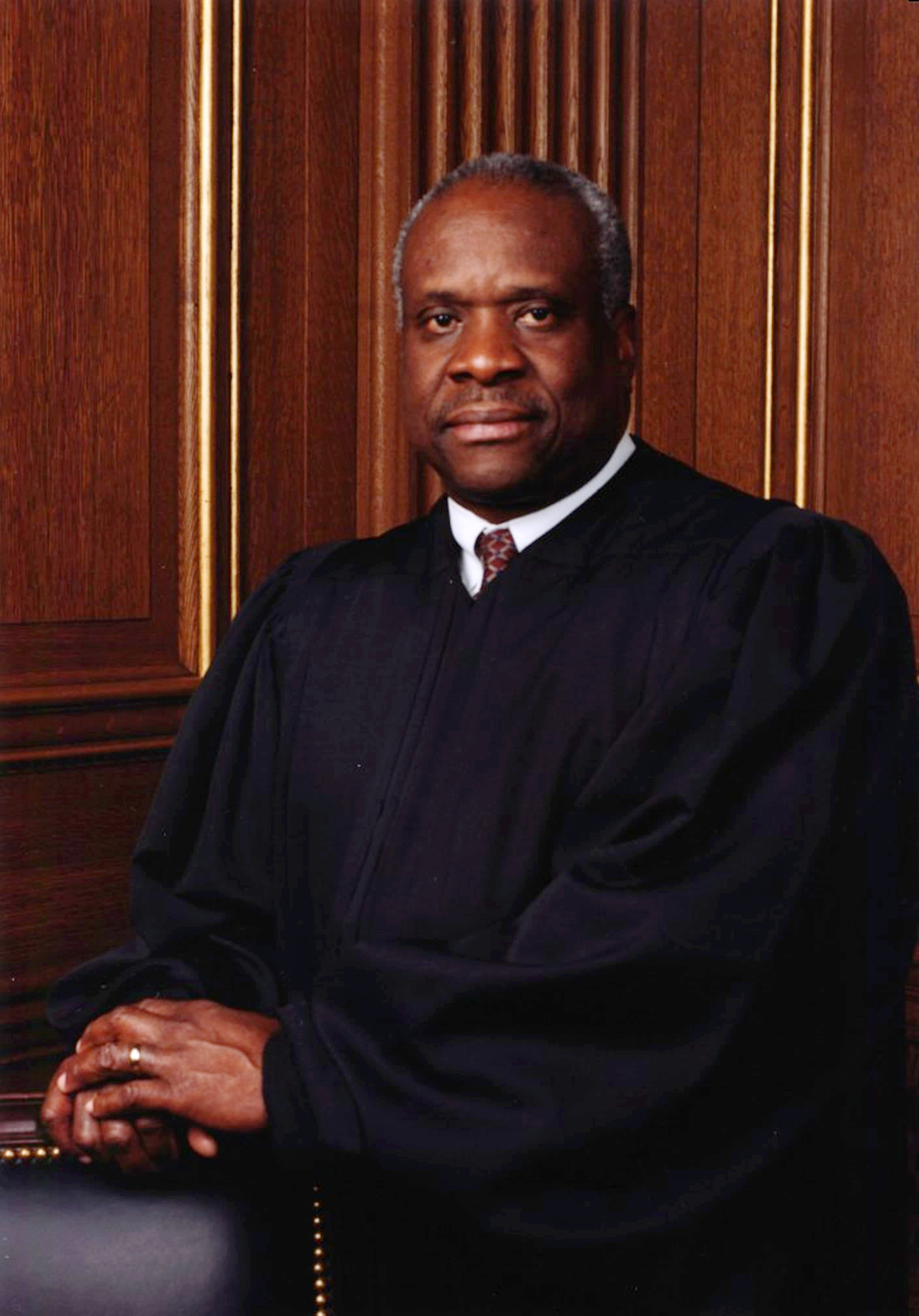
WHAT'S the difference between a low-tech lynching and a high-tech lynching? A high-tech lynching brings a tenured job on the Supreme Court and a $1.5 million book deal. A low-tech lynching, not so much.
We are always at a crossroads with race in America, and so here we are again. The rollout of Justice Thomas's memoir, "My Grandfather's Son," is not happening in a vacuum. It follows a Supreme Court decision (which he abetted) outlawing voluntary school desegregation plans in two American cities. It follows yet another vote by the Senate to deny true Congressional representation to the majority black District of Columbia. It follows the decision by the leading Republican presidential candidates to snub a debate at a historically black college as well as the re-emergence of a low-tech lynching noose in Jena, La.


One former Nixon White House colleague, Pat Buchanan, said on "Meet the Press" last weekend that it was no big deal for Republican candidates to skip a debate before an African-American audience because blacks make up only about 10 percent of the voting public and Republicans only get about a tenth of that anyway. It didn't occur to Mr. Buchanan that in 21st-century America many white voters are also offended by politicians who snub black Americans — whether at a campaign debate or in the rubble of Hurricane Katrina.

Republicans who play the race card may find that it has an expiration date even in the South. In 2000, Mr. Bush could speak at Bob Jones University when it still forbade interracial dating among its students, and John McCain could be tarred as the father of an illegitimate black child in the South Carolina primary. No more. Just ask the former Senator George Allen, the once invincible Republican prince of Virginia, whose career ended in 2006 after his use of a single racial slur.
Read more of Frank Rich @ NYT

The Right Judicial Litmus Test...Follow the Constitution, or not?


This question is made all the more urgent by the fact that on Jan. 20, 2009, six of the nine current justices will be over the age of 70--an age at which many people either retire or begin to wind down their affairs. There is thus a very real possibility that the next president could appoint as many as four justices in his first term alone. We may be getting ready for the biggest turnover in the membership of the Supreme Court since Richard Nixon's election in 1968 brought the Warren Court to an end.

I submit that the proper basis on which we should evaluate the court's performance in this term and in the future is not whether it reaches "conservative" or "liberal" results in constitutional cases, but whether it reaches results that are faithful to the Constitution as written and understood at the time of its adoption. Likewise, the test for presidential candidates on the judiciary should be whether they can be trusted to nominate justices who will follow our written Constitution. Read on @ Wall Street Journal

Charge It to My Kids


The struggle against radical Islam is the fight of our generation. We all need to pitch in — not charge it on our children’s Visa cards. Previous American generations connected with our troops by making sacrifices at home — we’ve never passed on the entire cost of a war to the next generation, said Robert Hormats, vice chairman of Goldman Sachs International, who has written a history — “The Price of Liberty” — about how America has paid for its wars since 1776.

“In every major war we have fought in the 19th and 20th centuries,” said Mr. Hormats, “Americans have been asked to pay higher taxes — and nonessential programs have been cut — to support the military effort. Yet during this Iraq war, taxes have been lowered and domestic spending has climbed. In contrast to World War I, World War II, the Korean War and Vietnam, for most Americans this conflict has entailed no economic sacrifice. The only people really sacrificing for this war are the troops and their families.” Read more of Thomas Friedman @ New York Times