Thursday, January 24, 2008

Dissent of the Day: Bill's role


I've gotten a few emails today from women who aren't comfortable with Bill Clinton's role, and didn't buy my argument that he's helping the campaign, the most clearly-argued of which came from Lori Quinn in Glendale, CA.

It obviously takes more than one (Obama-supporting) woman to make a trend, but it's a plausible argument, and I wondered if other readers feel the same way, or differently.

I am a mid-forties Democratic leaning (occasionally Republican voting) college-educated working mom. This label would neatly apply to most of my friends. I am admittedly an Obama supporter, but not antagonist to Hillary. I've been surprised by the affinity amongst other similarly situated women out here to Hillary's candidacy. They have been generally excited about prospect of a female president, regardless of my arguments that Hillary does not represent a self-made women in the mold of say Margaret Thatcher. Many of my politically-minded girlfriends watched the nationally televised d, ebate from New Hampshire (apparently we don't go out on Saturday nights any more) and I could have told you that the backlash amongst women and the rallying to Hillary was in full force, even while the media missed it until the votes were in.

However, something funny has happened the last couple of days that was crystallized amongst those watching highlights of last night's debate. Around the office today, a number of women who were definitely in the Hillary camp are starting to feel a little sick to their stomach about the role Bill Clinton's is playing. One remarked that she thought she would be voting for the first women president, not a trojan horse for Bill Clinton's overactive ambition. Another friend I thought last week would definitely vote for Hillary labeled them the "Dynastic Duo" this morning and said she may switch to Obama. And finally, my best friend, who already sent in her absentee ballot says, she's got serious "buyer's remorse" saying she thought she had voted for the first women president, but now she's not so sure she's advanced or hurt women everywhere by voting for Hillary.

I think the media is missing the point like they did in NH. Bill's role as of late is undermining the very strength derived from her seeming historic candidacy. Suddenly it doesn't look so historic, but simply a repeat of history. Again, I'm speaking from the anecdotal perspective from women like myself here in So Cal, but this tactic seems to backfiring amongst my peer group in a significant way. Courtesy Ben Smith @ Politico

Saturday, January 19, 2008

Obama and the Gipper


No one is surprised when Republican Presidential candidates invoke Ronald Reagan like they're counting prayer beads, but perhaps a better measure of the Gipper's political legacy is the fracas it has kicked up among the Democrats. This week, Barack Obama had the blaspheming temerity to acknowledge that Reagan was a transformational President.

"I think Ronald Reagan changed the trajectory of America, in a way that Richard Nixon did not, and in a way that Bill Clinton did not," the Senator told the Reno Gazette-Journal. "He put us on a fundamentally different path because the country was ready for it. I think they felt like with all the excesses of the 1960s and 1970s and government had grown and grown but there wasn't much sense of accountability in terms of how it was operating. . . . He just tapped into what people were already feeling, which was, 'We want clarity, we want optimism.'"

The obvious context of Mr. Obama's remarks was his case for "change" versus Hillary Clinton's "experience." But the Internet left went bananas, and John Edwards and Mrs. Clinton ripped into Mr. Obama as well. Mr. Edwards cited the "extraordinary damage" Reagan supposedly visited on the country, while in a conference call with reporters yesterday, Clinton surrogate and Baby Boom liberal Barney Frank said he was "stupefied" by Mr. Obama's "explicit endorsement" of the notion that the GOP is "the party of ideas."

According to this paranoid style, the "excesses" Mr. Obama referenced were liberal emblems like the civil rights, antiwar and women's movements, the Great Society's social welfare programs and the like. Please. More likely, the Illinois Senator was thinking of the actual reasons for Reagan's 1980 success: double-digit inflation, marginal tax rates as high as 70%, high unemployment, Soviet Communism on the march in Afghanistan, hostages in Tehran . . .

Mr. Obama is trying to associate the present with these crises -- and thus frame his candidacy as the advent of a liberal Reagan -- though whatever problems we now face are several orders of magnitude removed from those that gave rise to Reagan. And unlike Mr. Obama, Reagan campaigned on forthright policy reforms -- substance -- and not merely a change in style.

It was less his "optimism" or what the country "felt," as Mr. Obama had it, than it was Reagan's ideas that account for his success. He shifted electoral coalitions and realigned the U.S. political center to the right because he governed with a genuinely new domestic agenda and approach to foreign policy -- and it worked. Still, we suspect Mr. Obama is smarter than his Democratic critics in evoking Reagan as the example he wants to emulate, and it says something about the breadth of his political ambitions that he would do so.

The episode is most telling, though, for what it says about the ancient mariners of the Democratic Party and how little they've changed. Supposedly Mr. Obama committed a grievous blunder by nodding at the achievement of one of the most consequential Presidencies of the 20th century. If the rest of the Democrats can't even recognize the same, it suggests that the change they have in mind is back to the 1960s and '70s. Courstesy Wall Street Journal

How the White House may be won -- in the West


I am looking out the window of my office on the Seattle waterfront. On a clear day, I would see the deep blue of Puget Sound and the jagged peaks of the Olympics to the west. Today, there's nothing to see but the fuzzy outline of a container ship with its lights blurred by a thick gray mist.

At this moment, the race for president seems as foggy as the scene out my window. Burned by bad polls and the errors of conventional wisdom, the big-time pundits are no longer predicting which of the two leading Democratic contenders will get the chance to make history by becoming either the first woman or the first African-American to win a major party nomination. And the will of Republican voters is even more unfathomable, inclined as they seem to be to split their votes four or five ways.

All this uncertainty makes one thing almost certain: voters in the West will, for once, have a powerful voice in clarifying who the eventual nominees will be. Nevada became a prime battleground for the Democrats this last week. On Super Tuesday, Feb. 5, when 22 states will hold primaries or caucuses, a third of them will be in the West, including the big enchilada, California.

If, after that, the nominations are still in doubt, there's another prize to be won the following Saturday: Washington, with the second biggest cache of delegates in the West.

Once the nomination fights are over, the West could play a pivotal new role in determining November's victor because the West is not the Old West anymore. It's not even the New West it once was.

The political cliché is that California, Washington and Oregon are dominated by Hollywood liberals and Prius-driving tree huggers while the Mountain West is the domain of gun-toting ranchers and fervent members of evangelical megachurches. Democrats get the coast; Republicans get the Rockies.

Though superficially accurate, that division has not always held. Ronald Reagan swept all of the Western states twice while, in his two runs, Bill Clinton took the coast and picked off several of the mountain states. In 2000 and 2004, though (with the exception of New Mexico's defection to Democrat Al Gore), the cliché held true. That meant the real game was played elsewhere, in swing states like Ohio and Florida with lots of electoral votes.

In 2008, things could be different. Democrats have a strong shot at winning most of the West. If that should happen, the solid Republican base in the old Confederacy will not be enough to save the Republican candidate from defeat. Democrats could string together a new winning coalition from the states of the Northeast, the northern tier and the Far West.

Florida has 27 electoral votes; Ohio has 20. They were the pivotal states in the two narrow victories of George W. Bush. If Al Gore in 2000 or John Kerry in 2004 had been able to steal Arizona, Colorado, Nevada and Montana from the GOP column, Florida and Ohio wouldn't have mattered and Bush would be cutting brush in Crawford instead of running the country.

This year, those four states and their 27 electoral votes could go to the Democratic nominee. Why? Because Democrats are now winning in the West. Of the 11 governors in the Pacific Coast and mountain states, seven are Democrats and the most prominent of the Republicans, California's Arnold Schwarzenegger, solidified his popularity only after defying the Republican president on global warming.

Of the 22 Western U.S. senators, 10 are Democrats. Only in Idaho and Utah have voters not sent at least one Democrat to the U.S. Senate or the governor's mansion in the last few years.

In large part, this shift toward Democrats in the mountain states has been driven by demographic changes. Thousands of Californians have moved in and brought their progressive political sensibilities with them. The region has gained a more urban outlook in booming cities such as Phoenix, Las Vegas and Denver (where, significantly, the Democrats are holding their nominating convention). The Hispanic population has increased throughout the West and, especially in this year of heated immigration politics, those are people who lean sharply toward the Democrats.

This realignment has also come about because a new breed of Democrat has ridden into town. Montana provides a prime example. There, voters have elected a Democratic governor, Brian Schweitzer, and a new Democratic senator, Jon Tester, who are both ranchers. They don't carry themselves like citified Democrats in Seattle or Los Angeles or Boston. They don't scare their fellow ranchers with wild schemes to lock up the land and tax folks to death. They are genuine Democrats, but they speak with a Western twang and talk about common sense and common ground.

Yes, the right Democrat can take the West and leave the Republicans in the dust. But is someone named Barack or Hillary the right kind of Democrat? Read more of DAVID HORSEY @ Seattle PI

Image Of The Day


This was sent to me and I cannot confirm it independently but it's of a helicopter rescue mission in Afghanistan. Sometimes we forget what amazing people we have in the military - people with skills and balls most of us cannot even imagine. Whatever our differences about strategy and policy, I really don't see any evidence that the vast majority don't respect - even revere - the troops who are out there. I don't mean this as a typical look-at-me-I'm-a-patriot-Fox-News kind of gesture. But these kids are astonishing. Comments courtesy of Andrew Sullivan

Wednesday, January 16, 2008

Quote of the Day


"She's running against nobody and nobody gets 40% of the vote. The other 5% of the vote went to three other people. 27,924 votes went to the guy who believes in UFOs, the guy who dropped out and the guy who last held public office somewhere around 1855."

-- Karl Rove, quoted by NBC News, on Sen. Hillary Clinton's performance in the uncontested Michigan Democratic primary.

Saturday, January 12, 2008

Suppressing The Obama Vote In Las Vegas?


A Clinton-allied teachers' union files a law-suit against voting in the coming Democratic caucus in nine Vegas Strip hotels. It would hamper the Culinary workers in supporting Obama. The usual campaign hardball antics from the Clintons...see excerpts below

A lawsuit filed late Friday in federal court seeks to stop the Democratic Party from holding caucus meetings at nine Strip hotels, which would diminish the influence of casino workers and hamper Illinois Sen. Barack Obama’s campaign.


The Nevada State Education Association has not endorsed any candidate, Warne said.
The other plaintiffs are Dwayne Chesnut, John Cahill, Vicky and John Birkland, and Patricia Montgomery. Some of them were active backers of Sen. Dina Titus’ 2006 bid for governor. Titus, of Las Vegas, has endorsed Clinton. Mark Ferrario, the attorney who filed the lawsuit, would not comment on how he got the clients, other than to say they care about the fairness of the caucus process.


The complete story can be read @ Las Vegas Sun.
Courtesy of Andrew Sullivan

Clyburn May Back Obama


Rep. James Clyburn (D-SC), "the highest-ranking African-American in Congress, said he was rethinking his neutral stance in his state’s presidential primary out of disappointment at comments by Bill and Hillary Rodham Clinton that he saw as diminishing the historic role of civil rights activists," the New York Times reports.

"Clyburn, a veteran of the civil rights movement and a power in state Democratic politics, put himself on the sidelines more than a year ago to help secure an early primary for South Carolina, saying he wanted to encourage all candidates to take part. But he said recent remarks by the Clintons that he saw as distorting civil rights history could change his mind." Courtesy of Taegan Goddard's Political Wire

Mental Health Break

A charming short film that includes 100 people, banging a drum. From age one to 100:
">

Saturday, January 5, 2008

The Two Earthquakes


I’ve been through election nights that brought a political earthquake to the country. I’ve never been through an election night that brought two.

Barack Obama has won the Iowa caucuses. You’d have to have a heart of stone not to feel moved by this. An African-American man wins a closely fought campaign in a pivotal state. He beats two strong opponents, including the mighty Clinton machine. He does it in a system that favors rural voters. He does it by getting young voters to come out to the caucuses.

This is a huge moment. It’s one of those times when a movement that seemed ethereal and idealistic became a reality and took on political substance.

Iowa won’t settle the race, but the rest of the primary season is going to be colored by the glow of this result. Whatever their political affiliations, Americans are going to feel good about the Obama victory, which is a story of youth, possibility and unity through diversity — the primordial themes of the American experience.

And Americans are not going to want to see this stopped. When an African-American man is leading a juggernaut to the White House, do you want to be the one to stand up and say No?

Obama has achieved something remarkable. At first blush, his speeches are abstract, secular sermons of personal uplift — filled with disquisitions on the nature of hope and the contours of change.

He talks about erasing old categories like red and blue (and implicitly, black and white) and replacing them with new categories, of which the most important are new and old. He seems at first more preoccupied with changing thinking than changing legislation.

Yet over the course of his speeches and over the course of this campaign, he has persuaded many Iowans that there is substance here as well. He built a great organization and produced a tangible victory.

He’s made Hillary Clinton, with her wonkish, pragmatic approach to politics, seem uninspired. He’s made John Edwards, with his angry cries that “corporate greed is killing your children’s future,” seem old-fashioned. Edwards’s political career is probably over.

Obama is changing the tone of American liberalism, and maybe American politics, too.

On the Republican side...Read more of David Brooks @ NYT

Obama's Victory Speech

Wednesday, December 12, 2007

Obama catches Clinton in New Hampshire


Barack Obama has chipped away at Hillary Clinton's lead in New Hampshire locking the Democrats in a statistical tie a month before the first presidential primary, according to a CNN/WMUR Poll released Wednesday.

Clinton has dropped 5 percentage points since a previous CNN/WMUR survey in November, while Obama has gained 8 percentage points, according to the poll conducted by the University of New Hampshire Survey Center. Clinton is now at 31 percent to Obama's 30 percent. New Hampshire's primary is set for January 8.

Clinton's 5-percentage point drop appears to have been largely due to the loss of support among women.

"Clinton's support among Democratic women in New Hampshire has dropped from 43 percent to 33 percent," said CNN Polling Director Keating Holland. "By contrast, her support among men dropped only 1 point to 27 percent in that same time period."

Clinton is still viewed by Democratic primary voters as having the most experience and the best chance of beating the Republican presidential nominee. But Obama is seen as more likable, more believable and more likely to unite the country.
Among Republicans, the poll reveals that despite Mike Huckabee's meteoric rise in some Iowa and national surveys, the former Arkansas governor has yet to catch fire in New Hampshire. Huckabee remains in single digits at 9 percent, up 4 percentage points from November. But he still trails ex-Massachusetts Gov. Mitt Romney by 23 percentage points.

Romney remains in the lead in New Hampshire with 32 percent, according to the poll, followed by former New York Mayor Rudy Giuliani and Sen. John McCain of Arizona who are tied with 19 percent. Read more @ CNN

Sunday, December 9, 2007

CLINTON NO LONGER SHOULD WORRY JUST ABOUT IOWA


From NBC's Chuck Todd, Mark Murray and Domenico Montanaro
With just 24 days to go before Iowa, it appears the race for the Democratic nomination is no longer a tight 1-state contest, but a truly competitive race across the country.

In three new MSNBC/McCLATCHY/Mason-Dixon polls of Iowa, New Hampshire and South Carolina, the national frontrunner, Hillary Clinton, leads in all three states but her lead is not outside the margin of error in any of those states. Her largest lead is three points, statistically insignificant. Her leading challenger, Barack Obama is nipping at her heels, trailing in Iowa by 2 points and trailing in New Hampshire and South Carolina by just three points.

John Edwards is a major factor in Iowa and South Carolina but trails badly in New Hampshire. Read on @ First Read it is an analysis of the day's political news, from the NBC News political unit.

Sunday, December 2, 2007

Huckabee, Obama now lead


Barack Obama has pulled ahead in the race for Iowa's Democratic presidential caucuses, while the party's national frontrunner Hillary Clinton has slipped to second in the leadoff nominating state, according to The Des Moines Register's new Iowa Poll.

The lead change appears after weeks of increasing criticism of Clinton by Obama and Edwards about her position on U.S. policy toward Iran and questions of her candor.

Meanwhile, Clinton has recently begun accusing Obama of inexperience and criticizing his proposal to expand health insurance coverage.

The poll shows what has continued to be a wide gap between the top three candidates and the remainder of the field. The telephone survey of 500 likely Democratic caucusgoers was conducted Nov. 25 to 28 and has a margin of error of plus or minus 4.4 percentage points.

Iowa City Democrat Katharyn Browne said she abandoned her support for Clinton in the past month and now supports Obama in light of the Iran issue.

Obama spent weeks in October and November attacking Clinton's support for a measure that allowed President Bush to declare the Iran's Revolutionary Guard a terrorist organization, a move Obama said was a step toward war. Clinton said the measure enhanced U.S. negotiating strength with Iran.

"An Iran war terrifies me," said Browne, a 30-year-old University of Iowa student.

Browne said she feels Obama is a more inspirational candidate than Clinton, despite the intensifying crossfire between them.

"I just think that Obama is more of a positive candidate overall," she said. "Aside from the Clinton-Obama interaction lately, it's nice to hear a candidate with a positive outlook. I think our country needs that right now."
Despite the movement, the race for 2008's opening nominating contest remains very competitive about a month before the Jan. 3 caucuses, just over half of likely caucusgoers who favor a candidate saying they could change their minds.

Obama, an Illinois senator, leads for the first time in the Register's poll as the choice of 28 percent of likely caucusgoers, up from 22 percent in October. Clinton, a New York senator, was the preferred candidate of 25 percent, down from 29 percent in the previous poll.

Former North Carolina Sen. John Edwards, who led in the Register's May poll, held steady with 23 percent, in third place, but part of the three-way battle. Read on @ Des Moines Register

Goodbye to All That


Is Iraq Vietnam? Who really won in 2000? Which side are you on in the culture wars? These questions have divided the Baby Boomers and distorted our politics. One candidate could transcend them.

The logic behind the candidacy of Barack Obama is not, in the end, about Barack Obama. It has little to do with his policy proposals, which are very close to his Democratic rivals’ and which, with a few exceptions, exist firmly within the conventions of our politics. It has little to do with Obama’s considerable skills as a conciliator, legislator, or even thinker. It has even less to do with his ideological pedigree or legal background or rhetorical skills. Yes, as the many profiles prove, he has considerable intelligence and not a little guile. But so do others, not least his formidably polished and practiced opponent Senator Hillary Clinton.

Obama, moreover, is no saint. He has flaws and tics: Often tired, sometimes crabby, intermittently solipsistic, he’s a surprisingly uneven campaigner.

A soaring rhetorical flourish one day is undercut by a lackluster debate performance the next. He is certainly not without self-regard. He has more experience in public life than his opponents want to acknowledge, but he has not spent much time in Washington and has never run a business. His lean physique, close-cropped hair, and stick-out ears can give the impression of a slightly pushy undergraduate. You can see why many of his friends and admirers have urged him to wait his turn. He could be president in five or nine years’ time—why the rush?

But he knows, and privately acknowledges, that the fundamental point of his candidacy is that it is happening now. In politics, timing matters. And the most persuasive case for Obama has less to do with him than with the moment he is meeting. The moment has been a long time coming, and it is the result of a confluence of events, from one traumatizing war in Southeast Asia to another in the most fractious country in the Middle East. The legacy is a cultural climate that stultifies our politics and corrupts our discourse.

Obama’s candidacy in this sense is a potentially transformational one. Unlike any of the other candidates, he could take America—finally—past the debilitating, self-perpetuating family quarrel of the Baby Boom generation that has long engulfed all of us. So much has happened in America in the past seven years, let alone the past 40, that we can be forgiven for focusing on the present and the immediate future. But it is only when you take several large steps back into the long past that the full logic of an Obama presidency stares directly—and uncomfortably—at you. To read more click Andrew Sullivan

Wednesday, November 21, 2007

Political Ideology


Please complete the two political ideology quizzes and print out or write down your results for the next time we meet in class. Click here for Quiz 1 and for Quiz 2. If you want to compare have your parents take the quiz and see if you have differences...the age gap.

Tuesday, November 20, 2007

Former Aide Blames Bush for Leak Deceit


Former White House press secretary Scott McClellan blames President Bush and Vice President Dick Cheney for efforts to mislead the public about the role of White House aides in leaking the identity of a CIA operative.

In an excerpt from his forthcoming book, McClellan recounts the 2003 news conference in which he told reporters that aides Karl Rove and I. Lewis "Scooter" Libby were "not involved" in the leak involving operative Valerie Plame.

"There was one problem. It was not true," McClellan writes, according to a brief excerpt released Tuesday. "I had unknowingly passed along false information. And five of the highest-ranking officials in the administration were involved in my doing so: Rove, Libby, the vice president, the president's chief of staff and the president himself."

Bush's chief of staff at the time was Andrew Card.

The excerpt, posted on the Web site of publisher PublicAffairs, renews questions about what went on in the West Wing and how much Bush and Cheney knew about the leak. For years, it was McClellan's job to field _ and often duck _ those types of questions.

Now that he's spurring them, answers are equally hard to come by.

Read more @ Washington Post

Wednesday, November 7, 2007

The Craziest Juggling, Trick Shot Artist I Have Ever Seen!


Check Tim Nolan out!

Obama Makes The Post-Boomer Pitch


The candidate picks up and runs with the central thrust of this essay. Money quote from Obama:
"I think there's no doubt that we represent the kind of change that Senator Clinton can't deliver on and part of it is generational. Senator Clinton and others, they've been fighting some of the same fights since the '60's and it makes it very difficult for them to bring the country together to get things done."

From "Goodbye To All That":
A Giuliani-Clinton matchup, favored by the media elite, is a classic intragenerational struggle—with two deeply divisive and ruthless personalities ready to go to the brink. Giuliani represents that Nixonian disgust with anyone asking questions about, let alone actively protesting, a war. Clinton will always be, in the minds of so many, the young woman who gave the commencement address at Wellesley, who sat in on the Nixon implosion and who once disdained baking cookies. For some, her husband will always be the draft dodger who smoked pot and wouldn’t admit it. And however hard she tries, there is nothing Hillary Clinton can do about it. She and Giuliani are conscripts in their generation’s war. To their respective sides, they are war heroes...

The war today matters enormously. The war of the last generation? Not so much. If you are an American who yearns to finally get beyond the symbolic battles of the Boomer generation and face today’s actual problems, Obama may be your man.


Time will tell....

Friday, November 2, 2007

Argentina’s First Lady Elected President


Cristina Fernández de Kirchner, the wife of Argentina’s president, Néstor Kirchner, has become the first woman to be elected president in the country’s history, according to the latest official results published today.

Mrs. Kirchner, 54, the center-left Peronist party candidate and a senator, defeated a fractured opposition and avoided a runoff.

With 96 percent of the voting locations reporting, Mrs. Kirchner had 45 percent, ahead of Elisa Carrió, a center-left congresswoman, who had 23 percent, and Roberto Lavagna, a former finance minister, who had 17 percent, according to figures from the Ministry of Interior.

Mrs. Kirchner needed 45 percent of the vote outright, or 40 percent with at least a 10 percentage-point lead, to avoid a runoff.

Rival candidates accused her party of “theft” of ballots and other irregularities.

Mrs. Kirchner is the second woman to be elected leader of a South American nation in two years, after Michelle Bachelet, who became president of Chile last year. Read on @ New York Times

Wednesday, October 31, 2007

Did Obama Turn A Corner?

Globalization 101


To continue your exploration of Globalization today we will look into our presidential candidates views upon the issue of Globalization. As you read take notes on each candidate's position on Globalization. Click here for the Democratic candidates and the Republican candidates.

Monday, October 29, 2007

Huckabee Surges, Edwards Fades


The latest still photo from the slow motion, inter-party electoral horse race known as Iowa is in — and it looks like John Edwards is losing steam on the Democratic side while Mike Huckabee is charging at the GOP frontrunners. The University of Iowa Hawkeye Poll, released at 8 a.m. Monday morning, shows Hillary Clinton and Barack Obama in a heated battle on the Democratic side. Clinton leads the poll with 28.9% while Obama garnered 26.6%. John Edwards trails with 20%, a 6-point drop from the last Hawkeye poll in August.

For Edwards, who has basically been living in Iowa (and who parlayed a second place finish there in 2004 into a spot on the Democratic ticket), the results have to be disconcerting. Unlike Obama and Clinton, he has few other strongholds, and a poor showing in Iowa could place his candidacy in serious jeopardy.

On the bright side is that the people who do support Edwards have a history of showing up when it counts. Nearly 76% of Edwards' poll supporters attended the 2004 caucus, while 58% of Clinton's and 55% of Obama's supporters made the trip four years ago. "If we only look at caucus-goers who are almost certain to attend, we find that Edwards makes up the gap with Obama and Clinton, and moves clearly ahead," said David Redlawsk, the poll's director and an associate professor of political science at the University of Iowa. Of course, Bill Clinton skipped the caucuses in 1992, so this is the first time a Clinton is really running in the state, while Obama was an unknown almost everywhere four years ago. Another bad omen for Edwards: only 7.9% of Democrats polled said they are "very likely" to change their minds between now and January 3, when both parties caucus in Iowa.

On the Republican side, the Hawkeye poll showed that former Massachusetts governor Mitt Romney has widened his overall lead by 8 percentage points, to 36.2%. But Mike Huckabee, a former governor of Arkansas, has gained ground despite spending just $1.7 million compared to Romney's $53.6 million. Huckabee is up from less than 2 % in the same poll in August to 12.8%, putting him in a statistical tie for second place with Rudy Giuliani who garnered 13.1%. Giuliani had spent $30.2 million as of September 30, according to Federal Election Commission reports.

"If Huckabee can motivate religious conservatives to attend the caucuses in large numbers, he may well threaten Romney and close some of the overall gap," said Redlawsk. About 44% of Iowa Republican caucus-goers consider themselves Evangelical or born again. Read on @ CNN News

Thursday, October 25, 2007

Can the War on Terror Be Won?


Less than 12 hours after the 9/11 attacks, George W. Bush proclaimed the start of a global war on terror. Ever since, there has been a vigorous debate about how to win it. Bush and his supporters stress the need to go on the offensive against terrorists, deploy U.S. military force, promote democracy in the Middle East, and give the commander in chief expansive wartime powers. His critics either challenge the very notion of a "war on terror" or focus on the need to fight it differently. Most leading Democrats accept the need to use force in some cases but argue that success will come through reestablishing the United States' moral authority and ideological appeal, conducting more and smarter diplomacy, and intensifying cooperation with key allies. They argue that Bush's approach to the war on terror has created more terrorists than it has eliminated -- and that it will continue to do so unless the United States radically changes course.

Almost entirely missing from this debate is a concept of what "victory" in the war on terror would actually look like. The traditional notion of winning a war is fairly clear: defeating an enemy on the battlefield and forcing it to accept political terms. But what does victory -- or defeat -- mean in a war on terror? Will this kind of war ever end? How long will it take? Would we see victory coming? Would we recognize it when it came? Continue to read Philip Gordon of the Brookings Institute, @ Foreign Affairs

Innocent man shares his 20-year struggle behind bars


Williams' troubling story provokes discomfort in a nation that prides itself on a justice system where the accused are innocent until proven guilty. So far, DNA evidence has directly exonerated 208 wrongly convicted people in the United States, according to the Innocence Project. It's unknown how many prisoners now locked up in American jails could be freed by new testing of DNA evidence.
Because the science behind each person's unique DNA signature was new to police in 1985, the key evidence that sealed Williams' fate was the testimony of three eyewitnesses who mistakenly said they recognized him.
"Mistaken eyewitness identification has long been the single biggest factor in the conviction of innocents," said Barry Scheck, co-founder of the Innocence Project.
"That has got to be important to everybody, because if we can reform identification procedures, it will keep more innocent people out of jail and convict criminals who really commit the crimes."
Back in Georgia, during the ten months since Williams' friends and family welcomed him home with hugs and kisses, he's been taking his time rejoining society, attending electronics classes and dealing with his top complaint: 21st century traffic.
Williams has found a home in a church congregation and plans to join its choir, holding on to the spiritual anchor he formed in prison.
Money is tight for Williams, and, according to the Innocence Project, only 45 percent of those exonerated by DNA evidence have been financially compensated. He expects some compensation from Georgia, although the state has no law guiding such cases.
Regaining his freedom has renewed Williams' belief in the power of prayer, but he said it has done little to repair his faith in the nation's justice system. He wonders how many other Americans are still suffering injustices like his own. Read entire story @ CNN News

Obama-Gore '08 Ticket


From Andrew Sullivan of The Atlantic Monthly,
Let the speculation begin. I think Gore realizes that Obama is the only candidate who can break out of the brutal, polarizing, calculating, post-Vietnam syndrome and actually talk to all the country in clear ways about what practically we need to do at home and in the world. Gore would instantly erase the inexperience question over Obama; Obama would instantly erase the stylistic drawbacks of the Gore persona. The three big issues for me in this election are the war, the Constitution, and the environment. A Gore-Obama combo would be extremely hard to beat if those are your concerns.

Gore, moreover, knows what the Clintons would take us back to perhaps better than anyone else. He knows the paranoia of their operation, the Cheney-like secrecy they crave, the pathologies within our political culture they would instantly reignite, the danger that they will breathe new life into a hopefully dying Christianist movement. But the Clinton machine is in full throttle. If Gore wants to help provide an alternative, he needs to intervene before Iowa. He needs to endorse Obama. For the sake of his country.

ABC News Sunlen Miller Reports: How Does an Obama-Gore Ticket Sound? Don't Hold Your Breath. "I can promise you that as president I will have him involved in our administration in a very senior capacity in his role," Obama responded that, "having won the Nobel peace prize and an Oscar that being Vice President again would be probably a step down for him." Read on @ ABCNews

Wednesday, October 24, 2007

US War Could Cost $2.4 Trillion by 2017


Economic advisors to Congress warn the cost of U.S.-led war on terror could exceed $2 trillion over the next 10 years. Much of that funding comes from money borrowed overseas, and the non-partisan Congressional Budget Office says it would be best to start paying for the war now and not let the debt grow. From Washington, Margaret Besheer has more @ Voice of America.
"The truth is that this administration from its original $50 billion estimate on the cost of the war in Iraq right through the estimates being made outside this committee today, consistently low-balls, misstates to the American people the true cost of the dollars, and of course, the true cost in blood that we are paying for this go-it-alone misadventure," said Democratic Congressman Lloyd Doggett of Texas.

The White House brushed off the estimate as speculation, but admitted that it did not know how much the war would cost. Read on @ Yahoo News

Bush Stands by Plan for Missile Defenses


President Bush on Tuesday strongly defended plans to build missile defenses in Europe, arguing that Iran posed an urgent threat to some NATO allies. He also chided the Democratic-controlled Congress for cutting spending that he called “vital to the security of America.”

“The need for missile defense in Europe is real, and I believe it is urgent,” Mr. Bush said, speaking at the National Defense University here. “Iran is pursuing the technology that could be used to produce nuclear weapons and ballistic missiles of increasing range that could deliver them.”

Mr. Bush’s remarks — part of a broad defense of the administration’s national security strategy after the Sept. 11, 2001, attacks — came only 11 days after his secretaries of state and defense went to Moscow and discussed ways to ease Russia’s concerns over the deployment of missile defenses in Poland and the Czech Republic.

While Mr. Bush invited Russian cooperation, he also made it clear that the administration intended to proceed with building missile sites as part of a plan to deploy the interceptor missiles in several years. His tone appeared more hawkish than that of Defense Secretary Robert M. Gates, who had said earlier in the day in Prague that while the United States wanted the deployment to move forward, the missiles might not be activated immediately after being deployed.

“We have not fully developed this proposal,” Mr. Gates said, appearing with the Czech prime minister, Mirek Topolanek, “but the idea was we would go forward with the negotiations, we would complete the negotiations, we would develop the sites, build the sites, but perhaps delay activating them until there was concrete proof of the threat from Iran.”

At the meetings in Moscow, on Oct. 12 and 13, the Russians called for the United States to freeze the planned deployment of the missiles in Poland and a radar station in the Czech Republic. While Mr. Gates and Secretary of State Condoleezza Rice ruled that out, the two countries did agree to share information about potential threats from Iran.

Mr. Bush would like to make missile defense a defining legacy of his presidency, though critics say the initial system, with a limited number of missile interceptors in Alaska and California, remains unproven. Missile defense has been a core of Republican ideology since Ronald Reagan proposed what came to be known as the “Star Wars” program in 1983, and it remains hugely popular among the Republican candidates vying to succeed Mr. Bush. Read more @ New York Times

Cost of California Wildfires Is More than $1 Billion


Wildfires in Southern California have caused at least $1 billion in damage in San Diego County alone — and that figure is expected to rise, officials warned Wednesday.

In just four days, the blazes have burned 410,000 acres and forced at least 500,000 people to flee their homes — the largest evacuation in state history.

Homeland Security Secretary Michael Chertoff told NPR that 2,100 homes and buildings have been substantially damaged.

So far, the worst damage is in San Diego County. Ron Lane, San Diego County's director of emergency services, said the fires will be costly.

"Clearly, this is going to be a $1 billion or more disaster," he said.

President Bush set the wheels in motion for California to receive federal aid Wednesday, signing a major disaster declaration.

"Americans all across this land care deeply about them," the president said after a Cabinet meeting convened to coordinate federal relief efforts. "We're concerned about their safety. We're concerned about their property."

The fierce Santa Ana winds, sometimes gusting to 70 mph, have fanned the blazes for days, but forecasters now predict they will begin to die down. Read on @ National Public Radio

Tuesday, October 23, 2007

Candidate Hillary: the GOP's dream


The most interesting thing to come out of the umpteenth Republican debate Sunday is confirmation that the GOP is dying to run against Hillary Clinton. Like Don Rickles flaying a heckler, each candidate whacked at Clinton as if she were a pants-suited piñata. When they were done with their one-liners, former Arkansas Gov. Mike Huckabee deadpanned: "Look, I like to be funny. There's nothing funny about Hillary Clinton being president."

No, but there's something deeply advantageous about having her as an opponent. So far, the commentary about the Republican offensive against Hillary has focused mostly on how it reflects poorly on the GOP (those Clinton-hating wing nuts are at it again!). What's not been fully grasped is how Hillary gives the GOP its best chance at being the party of change.

The question that remains is whether the critical 5% to 10% of swing voters will think Hillary Clinton represents the sort of change they want.

What most independents and swing voters want is an end to the acrimony and bitterness in Washington -- and a candidate they like. Whether that's right or not is irrelevant. That's what they want.

Which Democratic candidate would be most likely to give those voters what they want? Not Hillary, it's safe to say.


Right now, during the primaries, she can get away with boasting about her tenure in the Clinton administration. Party activists are drunk with Clinton nostalgia. On the stump in Iowa, Bill Clinton responded to the claim that Hillary was "yesterday's news" by saying, yeah, but "yesterday's news was pretty good."

If Democrats could get out of their bubble, it might dawn on them that virtually all of their other candidates are better positioned to run as champions of change. Hillary Clinton has shrewdly tried to trim the differences between her and the competition by claiming that any of them would be better than George W. Bush. From a liberal perspective, that's obviously true. But that perspective won't necessarily dominate come next fall, particularly if conditions in Iraq continue to improve.

Is it really so obvious that, say, Rudy Giuliani or Mitt Romney represent "change" less than the ultimate Clinton retread, complete with Bill as "first gentleman?" That's how Democrats are betting right now, and they may be bitterly disappointed -- again -- when it comes time to collect.

Read on with Jonah Goldberg @ Los Angeles Times

Make Walls, Not War


IN a surge of realism, the Senate has voted 75-23 to acknowledge that Iraq has broken up and cannot be put back together. The measure, co-sponsored by Joe Biden, a Democratic presidential candidate, and Sam Brownback, Republican of Kansas, supports a plan for Iraq to become a loose confederation of three regions — a Kurdish area in the north, a Shiite region in the south and a Sunni enclave in the center — with the national government in Baghdad having few powers other than to manage the equitable distribution of oil revenues.

While the nonbinding measure provoked strong reactions in Iraq and from the Bush administration, it actually called for exactly what Iraq’s Constitution already provides — and what is irrevocably becoming the reality on the ground. Read more of Peter W. Galbraith @ NYT

Sunday, October 21, 2007

Photo of the Day

Obama's next move after 2008...


A few years as governor would boost senator's presidential aspirations
A few random observations for a Sunday morning. Not a single vote has been cast, but the political pundits are talking about the inevitability of a Hillary Clinton nomination as the Democratic presidential candidate. Let's forgo a debate on her various vulnerabilities, Barack Obama's celebrated strengths and the many uncertainties of primary politics, and accept it as true for the moment. The question then becomes: What's next for Obama?

He could return to full-time work in the U.S. Senate. But history tells us that the longer a politician stays in the Senate, the bigger resume of votes he accumulates that can be turned against him in a national political campaign. Even if Clinton were elected president, the fact remains that Capitol Hill has not been as successful a launching pad for presidential aspirations as state capitals.

So perhaps Obama might think about directing his attention toward Springfield and run for governor in 2010. Gov. Blagojevich's scorched-earth policy there has alienated Democratic and Republican legislators alike, and a couple more years of the chaos we witnessed this year will have voters eager to embrace a leader at least capable of working harmoniously with his own party.

A few years running the state would give Obama the kind of executive seasoning that the electorate likes to see in candidates for president. It's a lack of experience that has been perceived as the Achilles' heel of his White House bid.

Suicide Is Not Painless


IT was one of those stories lost in the newspaper’s inside pages. Last week a man you’ve never heard of — Charles D. Riechers, 47, the second-highest-ranking procurement officer in the United States Air Force — killed himself by running his car’s engine in his suburban Virginia garage.

Mr. Riechers’s suicide occurred just two weeks after his appearance in a front-page exposé in The Washington Post. The Post reported that the Air Force had asked a defense contractor, Commonwealth Research Institute, to give him a job with no known duties while he waited for official clearance for his new Pentagon assignment. Mr. Riechers, a decorated Air Force officer earlier in his career, told The Post: “I really didn’t do anything for C.R.I. I got a paycheck from them.” The question, of course, was whether the contractor might expect favors in return once he arrived at the Pentagon last January.

Set against the epic corruption that has defined the war in Iraq, Mr. Riechers’s tragic tale is but a passing anecdote, his infraction at most a misdemeanor. The $26,788 he received for two months in a non-job doesn’t rise even to a rounding error in the Iraq-Afghanistan money pit. So far some $6 billion worth of contracts are being investigated for waste and fraud, however slowly, by the Pentagon and the Justice Department. That doesn’t include the unaccounted-for piles of cash, some $9 billion in Iraqi funds, that vanished during L. Paul Bremer’s short but disastrous reign in the Green Zone. Yet Mr. Riechers, not the first suicide connected to the war’s corruption scandals, is a window into the culture of the whole debacle.

Read more of Frank Rich @ New York Times

Louisiana elects first nonwhite governor since Reconstruction


U.S. Rep. Bobby Jindal became the nation's youngest governor and the first nonwhite to hold post in Louisiana since Reconstruction when he carried more than half the vote to defeat 11 opponents.

Jindal, the Republican 36-year-old son of Indian immigrants, had 53 percent with 625,036 votes with about 92 percent of the vote tallied. It was more than enough to win Saturday's election outright and avoid a November 17 runoff.

"My mom and dad came to this country in pursuit of the American dream. And guess what happened. They found the American Dream to be alive and well right here in Louisiana," he said to cheers and applause at his victory party.

His nearest competitors: Democrat Walter Boasso with 208,690 votes or 18 percent; Independent John Georges had 167,477 votes or 14 percent; Democrat Foster Campbell had 151,101 or 13 percent. Eight candidates divided the rest.

"I'm asking all of our supporters to get behind our new governor," Georges said in a concession speech.

The Oxford-educated Jindal had lost the governor's race four years ago to Gov. Kathleen Blanco. He won a congressional seat in conservative suburban New Orleans a year later but was widely believed to have his eye on the governor's mansion. Read on @ CNN Politics

Saturday, October 20, 2007

US navy 'plans W Africa exercise'


The Gulf of Guinea has significant strategic importance because a large percentage of U.S. oil imports flow through it...
It provides a good example of what the newly established U.S. Africa Command is about as it relates to helping our partner nations on the continent of Africa build their capacity to better govern their spaces, to have more effect in providing for the security of their people, as well as doing the things that are important in assuring the development of the continent in ways that promote increased globalization of their economies as well as the development of their societies for the betterment of their people," said the general. Read more @ Voice of America

Wednesday, October 17, 2007

Poll: Black support helps Clinton extend lead


Sen. Hillary Clinton's lead over Sen. Barack Obama, her chief rival for the Democratic presidential nomination, is growing among African-American voters who are registered Democrats, and particularly among black women, a poll said Wednesday.
Among black registered Democrats overall, Clinton had a 57 percent to 33 percent lead over Obama.

That's up from 53 percent for Clinton and 36 percent for Obama in a poll carried out in April.

The 26-point difference between black women and men underscores the fact that the nation's vote is divided not only by race, but also by gender, said CNN political analyst Bill Schneider. "Black women don't just vote their black identity," he said. "They also vote their identity as women."

Among white registered Democrats, Clinton drew 49 percent support, versus 18 percent for Obama and 17 percent for former Sen. John Edwards of North Carolina, the latest poll found.

The question had a sampling error of plus-or-minus 6.5 percentage points.
Click HERE for the four charts. To read more from CNN...

Friday, October 12, 2007

Photo of the Day


Fog creates a challenge for golfers at an international tournament in Virginia Water, Britain.

Judging genocide...Strained relations between Turkey and America


“THE Mohammedans in their fanaticism seemed determined not only to exterminate the Christian population but to remove all traces of their religion and…civilisation.” So wrote an American consul in Turkey, in 1915, about an incipient campaign by Ottoman Turkey against its Armenian population. Today, Turkey explains the killings of huge numbers of Armenians—as many as 1.5m died—as an unpleasant by-product of the first world war’s viciousness, in which Turks suffered too. But Armenians have long campaigned for recognition of what they say was genocide.

On Wednesday October 10th America’s Congress stepped closer to endorsing the latter view. The foreign-affairs committee of the House of Representatives passed a bill stating that “the Armenian Genocide was conceived and carried out by the Ottoman Empire from 1915 to 1923.” The bill has enough co-sponsors that it seems likely to pass the full House. The speaker, Nancy Pelosi, has a large number of Armenians in her home district and has promised the measure a vote on the floor. As a foretaste of the trouble this could stir up in Turkey, the country’s president, Abdullah Gul, immediately condemned the passage of the bill. He called it “unacceptable” and accused American politicians of being willing to cause “big problems for small domestic political games”.

Turkey is enormously important to American military efforts in the Middle East. So leading American politicians past and present have lined up to oppose the resolution. President George Bush has said historians, not legislators, should decide the matter. Turkey has hired Dick Gephardt, a former leader of the Democrats in the House, to lobby against the bill. All eight living former secretaries of state, from Henry Kissinger to Madeleine Albright, who lost three grandparents in the Nazi Holocaust, oppose the bill. So does Condoleezza Rice, who holds the post now. Jane Harman, a powerful and hawkish Democrat, initially co-sponsored the measure. But last week she urged its withdrawal. A trip to Turkey, where she met the prime minister and the Armenian Orthodox patriarch, changed her mind.

Ms Harman echoed an argument that others have made against the resolution: that Turkey itself is tiptoeing towards normal relations with neighbouring Armenia. The resolution could throw that process off course. But in other ways Turkey has not helped its own case: its criminal code has been used against writers within the country who dare to mention genocide. Continue @ The Economist

Thursday, October 11, 2007

Marines press to remove their forces from Iraq


The Marine Corps is pressing to remove its forces from Iraq and to send marines instead to Afghanistan, to take over the leading role in combat there, according to senior military and Pentagon officials.

The idea by the Marine Corps commandant would effectively leave the Iraq war in the hands of the army while giving the Marines a prominent new role in Afghanistan, under overall NATO command.

The suggestion was raised in a session last week convened by Defense Secretary Robert M. Gates for the Joint Chiefs of Staff and regional war-fighting commanders. While still under review, its supporters, including some in the army, argue that a realignment could allow the army and Marines each to operate more efficiently in sustaining troop levels for two wars that have put a strain on their forces.

As described by officials who had been briefed on the closed-door discussion, the idea represents the first tangible new thinking to emerge since the White House last month endorsed a plan to begin gradual troop withdrawals from Iraq, but also signals that American forces likely will be in Iraq for years to come.

At the moment, there are no major Marine units among the 26,000 or so American forces in Afghanistan. In Iraq there are about 25,000 marines among the 160,000 American troops there. See more @ International Herald Tribune

Wednesday, October 10, 2007

Romney and Giuliani Spar as New Guy Looks On


Rudolph W. Giuliani of New York and Mitt Romney of Massachusetts tangled over taxes and government spending yesterday as the Republican presidential candidates debated in Michigan, highlighting the way in which their increasingly fierce confrontation is starting to dominate the race for their party’s nomination.

The debate also marked the debut of Fred D. Thompson of Tennessee alongside his Republican rivals. Mr. Thompson often appeared unsmiling and less practiced than the eight others onstage with him, who had already met five times before yesterday. But he avoided any notable missteps and held his own on substantive exchanges over the economy and foreign policy.

Mr. Thompson often found himself a bystander as Mr. Giuliani and Mr. Romney attacked each another — or, just as frequently, went after Senator Hillary Rodham Clinton, reflecting Republicans’ expectation of a general election contest against Mrs. Clinton, who is leading in polls of the Democratic candidates.

Mr. Giuliani, a former New York mayor, and Mr. Romney, a former Massachusetts governor, employed a blizzard of often-conflicting statistics as they sought to undercut each other’s records on cutting taxes or spending. But most of all, they clashed over a line-item veto that Mr. Romney said was essential to reducing spending in Washington and that Mr. Giuliani challenged successfully in the Supreme Court. Read on @ New York Times

Obama and the Black Vote


A money observation from an Andrew Sullivan reader and follow up by Andrew. One reason he has not wrapped up the black vote is because of readers like this one:
Obama will not be the Democratic Nominee, so this is probably a moot point. Too many of us do not believe America will elect him. That’s why he's stuck in the polls, despite being so good in so many ways, despite his fundraising. Or as some of the cynics among us note: "Yeah, America loves white liberals so much, let’s give 'em a Black liberal."

The "Bradley effect" is for the late Tom Bradley, former mayor of LA and two-time Dem. Governor nominee. And Black. Going into the 1982 election, he led in the polls, only to lose by less than 1%. It has been traced to white voters who said they would vote for Bradley, only once they were in the voting booth, pulled the lever for the white guy, the inferior George Deukmejian. (One can ruminate how different America might have been had Colin Powell decided to run in ’96 ...)

You would gain tremendous insight by talking to some Black, middle age folks. You will gain insight as to why this group favors (rightly or wrongly), Hillary. And they will tell you that (1) Obama is not ready; (2) He will be assassinated if he gets within striking distance of the White House. Middle-age Blacks know a thing or two about how America really is. One does not hear these insights from younger white folks.

Many African-Americans simply do not believe that a black man will ever be allowed to be president. They're sticking with Clinton because she's the strongest non-black Democrat. And so racism perpetuates itself through the fears and alienation of its victims. Call it the audacity of hopelessness. And Clinton needs it.

Sunday, October 7, 2007

Steelers Run Over Seahawks, 21-0!


The Pittsburgh Steelers didn't have their two best defensive players, their two starting wide receivers or much offense for the first half. With all that, they still had far too much for the Seattle Seahawks.

Ben Roethlisberger, scrambling and improvising without his usual receivers, finally got the Steelers' offense going. He led three successive lengthy touchdown drives highlighted by Najeh Davenport's runs and Pittsburgh's undermanned defense dominated Seattle in a 21-0 victory Sunday.

Nobody Knows the Lynchings He’s Seen


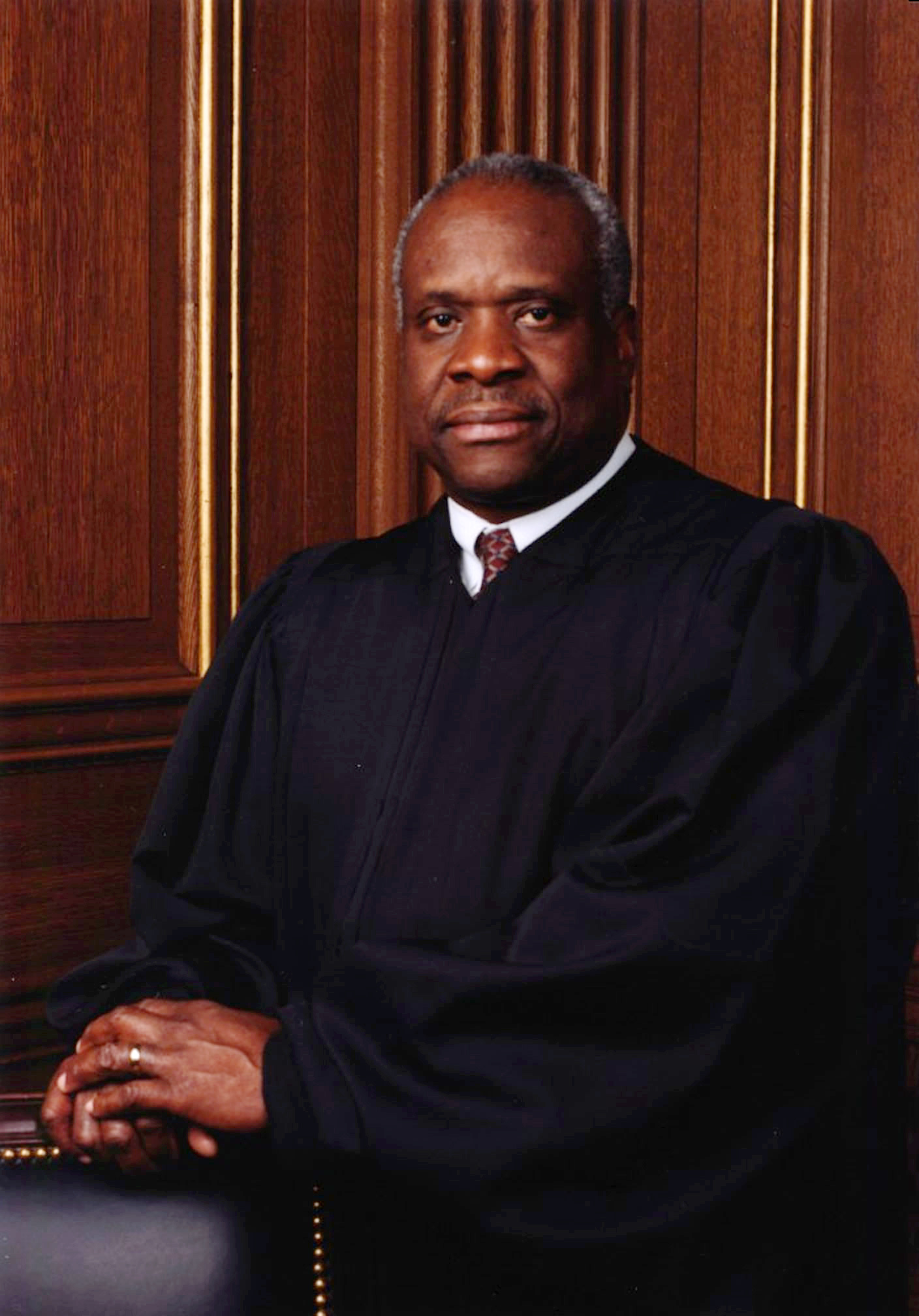
WHAT'S the difference between a low-tech lynching and a high-tech lynching? A high-tech lynching brings a tenured job on the Supreme Court and a $1.5 million book deal. A low-tech lynching, not so much.
We are always at a crossroads with race in America, and so here we are again. The rollout of Justice Thomas's memoir, "My Grandfather's Son," is not happening in a vacuum. It follows a Supreme Court decision (which he abetted) outlawing voluntary school desegregation plans in two American cities. It follows yet another vote by the Senate to deny true Congressional representation to the majority black District of Columbia. It follows the decision by the leading Republican presidential candidates to snub a debate at a historically black college as well as the re-emergence of a low-tech lynching noose in Jena, La.


One former Nixon White House colleague, Pat Buchanan, said on "Meet the Press" last weekend that it was no big deal for Republican candidates to skip a debate before an African-American audience because blacks make up only about 10 percent of the voting public and Republicans only get about a tenth of that anyway. It didn't occur to Mr. Buchanan that in 21st-century America many white voters are also offended by politicians who snub black Americans — whether at a campaign debate or in the rubble of Hurricane Katrina.

Republicans who play the race card may find that it has an expiration date even in the South. In 2000, Mr. Bush could speak at Bob Jones University when it still forbade interracial dating among its students, and John McCain could be tarred as the father of an illegitimate black child in the South Carolina primary. No more. Just ask the former Senator George Allen, the once invincible Republican prince of Virginia, whose career ended in 2006 after his use of a single racial slur.
Read more of Frank Rich @ NYT

The Right Judicial Litmus Test...Follow the Constitution, or not?


This question is made all the more urgent by the fact that on Jan. 20, 2009, six of the nine current justices will be over the age of 70--an age at which many people either retire or begin to wind down their affairs. There is thus a very real possibility that the next president could appoint as many as four justices in his first term alone. We may be getting ready for the biggest turnover in the membership of the Supreme Court since Richard Nixon's election in 1968 brought the Warren Court to an end.

I submit that the proper basis on which we should evaluate the court's performance in this term and in the future is not whether it reaches "conservative" or "liberal" results in constitutional cases, but whether it reaches results that are faithful to the Constitution as written and understood at the time of its adoption. Likewise, the test for presidential candidates on the judiciary should be whether they can be trusted to nominate justices who will follow our written Constitution. Read on @ Wall Street Journal

Charge It to My Kids


The struggle against radical Islam is the fight of our generation. We all need to pitch in — not charge it on our children’s Visa cards. Previous American generations connected with our troops by making sacrifices at home — we’ve never passed on the entire cost of a war to the next generation, said Robert Hormats, vice chairman of Goldman Sachs International, who has written a history — “The Price of Liberty” — about how America has paid for its wars since 1776.

“In every major war we have fought in the 19th and 20th centuries,” said Mr. Hormats, “Americans have been asked to pay higher taxes — and nonessential programs have been cut — to support the military effort. Yet during this Iraq war, taxes have been lowered and domestic spending has climbed. In contrast to World War I, World War II, the Korean War and Vietnam, for most Americans this conflict has entailed no economic sacrifice. The only people really sacrificing for this war are the troops and their families.” Read more of Thomas Friedman @ New York Times

Saturday, October 6, 2007

An escape for a cloudy weekend...

Dead Poets Society-3

Why do I stand up here?

Why veto a popular health-care bill?


GEORGE BUSH has some fight left in him and he has chosen a thankless battle. On Wednesday October 3rd the president vetoed legislation that would have reauthorised and expanded the State Children’s Health Insurance Program (SCHIP), which provides health-care insurance to more than 6m poor children.

It is a popular programme and the bill passed the House and Senate with robust bipartisan majorities. So Mr Bush’s veto—it is only his fourth—has done nothing for his public image. Harry Reid, the Senate majority leader, called the veto “heartless” and asked how the president sleeps at night. “It is incomprehensible,” said Ted Kennedy, a Democratic senator from Massachusetts. Some usually reliable allies were less melodramatic but still critical. Orrin Hatch, a conservative Republican senator from Utah, suggested that the president is receiving some bad advice. Read on @ The Economist...

Friday, October 5, 2007

Picks of the Week


College Football
No. 10 Oklahoma vs. No. 19 Texas = Sooners take out their frustrations on the Horns.
#9 Florida at #1 LSU = Can the Gators rebound in Baton Rouge...my heart is with UF but Tigers win.
Notre Dame at UCLA = The Irish eyes will weep in the Rose Bowl as Bruins win.
#25 Nebraska at #17 Missouri = Can the Tigers be for real...Yes, with a win against the Cornhuskers.
Kansas at #24 Kansas State = The battle for the Big 12 is in Kansas...what is the world coming too...Wildcats win!

The National Football League
Seattle at Pittsburgh = A repeat of Super Bowl XL opponents with the same result, Steelers win!
Chicago at Green Bay = Bears feeling black and blue as the Pack goes to 5-0
Cleveland at New England = Browns put up fight but the talented Pats stay undefeated
Jacksonville at Kansas City = Jags get a tough win @ Arrowhead Stadium
San Diego at Denver = The Charge has left SD as Broncos dominate in the Rockies

Any thoughts from fellow Prognosticators?!

The Arctic's alarming sea change


The Arctic ice cap shrank so much this summer that waves briefly lapped along two long-imagined Arctic shipping routes, the Northwest Passage over Canada and the Northern Sea Route over Russia.

Over all, the floating ice dwindled to an extent unparalleled in a century or more, by several estimates.

Now the six-month dark season has returned to the North Pole. In the deepening chill, new ice is already spreading over vast stretches of the Arctic Ocean. Astonished by the summer's changes, scientists are studying the forces that exposed one million square miles of open water, or 2.6 million square kilometers, beyond the average since satellites started measurements in 1979.

At a recent gathering of sea-ice experts in Fairbanks, Alaska, a geophysicist summarized it this way: "Our stock in trade seems to be going away." Scientists are also unnerved by the summer's implications for the future, and their ability to predict it.

Complicating the picture, the dramatic Arctic change was as much a result of ice moving as melting, many say. A study led by Son Nghiem at NASA, and appearing this week in Geophysical Research Letters, used satellites and buoys to show that winds since 2000 had pushed huge amounts of thick old ice out of the Arctic basin past Greenland. The thin floes that formed on the resulting open water melted quicker or could be shuffled together by winds and similarly expelled, the authors said. Read more @ International Hearald Tribune

Hounding the Bloggers


More vileness from Burma:
The government has called upon state-run media agencies and government supporters to publish photographs of citizen journalists and take action against them.

George Packer writes about the suddenly iconic image of the murdered monk, posted above and here:
How this particular monk came to be lying face down in a Rangoon stream is not known. But the picture—reminiscent, in a way, of others from places like Rwanda, Iraq, Cambodia, and Nazi Germany—shows totalitarianism in its most physical form: the elimination not just of an individual’s life but of his value. Aye Chan Naing, D.V.B.’s executive director, told me by phone from Oslo that as many as six thousand Burmese, the majority of them monks, have been detained in four locations around Rangoon, and their fate is uncertain. After nightly raids, the monasteries are “totally empty,” and he fears the worst for the detainees.

If you are moved by this you may consider to sign the petition.

Face of the Day


A toy factory worker in Guangdong Province China, as photographed by Michael Wolf.

Peggy Noonan's Open Eyes


A money passage from Andrew Sullivan I've long enjoyed Peggy Noonan's work (except for one dreadful book even she must regret writing). I don't always agree with her, but she represents for me that brand of blue-state conservatism that came of age in the Reagan era, one that was often Catholic (though not dogmatically so), repelled by the bile of the far left, respectful of religion and tradition but very much at ease with the modern world, often urban and ethnic, and very susceptible to the charm and rhetoric and deep seriousness of Reagan. I guess she reminds me of my mum and sister. These kinds of conservatives are meritocrats. They were much more Reagan than Bush. And they are deeply distrustful of dynasty and inheritance. They're not country club Republicans. But they're not Dobsonites either. And they don't always vote for the party of the right.

The idea of America being run by two families for two decades is anathema to such conservatives, as it is to many liberals. There is something inherently corrupting about it - not just corrupting of them, but corrupting of us. The experience of such power - presiding over the most powerful nation in modern history - cannot but corrupt; and our decision to delegate real decisions to various royal families while boning up on the latest news from Britney Spears is a sign of real decadence. In a war this dangerous, it's positively reckless, especially given the vast new neo-monarchical powers this administration has seized and will, in large part, bequeath to the next president. We have learned how one such succession has worked out. We should be extremely leery of another, especially since so many in the Washington establishment have already decided that this race is over, and it is now the voters' job to crown the next-in-line for the throne. So give Peggy a few minutes of your time today:
Barack Obama has a great thinking look. I mean the look he gets on his face when he's thinking, not the look he presents in debate, where they all control their faces knowing they may be in the reaction shot and fearing they'll look shrewd and clever, as opposed to open and strong. I mean the look he gets in an interview or conversation when he's listening and not conscious of his expression. It's a very present look. He seems more in the moment than handling the moment. I've noticed this the past few months, since he entered the national stage. I wonder if I'm watching him more closely than his fellow Democrats are.

Mr. Obama often seems to be thinking when he speaks, too, and this comes somehow as a relief, in comparison, say, to Hillary Clinton and President Bush, both of whom often seem to be trying to remember the answer they'd agreed upon with staff. What's the phrase we use about education? Hit Search Function. Hit Open. Right-click. "Equity in education is essential, Tim . . ."

You get the impression Mr. Obama trusts himself to think, as if something good might happen if he does. What a concept. Anyway, I've started to lean forward a little when he talks.
Read on @ Wall Street Journal

Worker Safety - The Triangle Fire Legacy


The following is the lesson in Economics class for Friday, October 5th.

The Triangle Shirtwaist Fire of 1911 was a turning point for employee health and safety protections in the U.S. You will investigate the Triangle tragedy and how its impact is still felt today. Identify eerie parallels between the Triangle Fire and more recent workplace events with safety implications – recent complaints of Wal-Mart employee lock-ins, a deadly fire in a North Carolina poultry processing plant in 1991, and a 1993 fire in a Thailand toy factory given the sad distinction of most deadly industrial fire in the world. How can future tragedies be prevented in the workplace? Assess the costs, benefits and effectiveness of various government and labor actions. You will discover that worker safety is a complex issue and there is no one-size-fits-all solution.

Following links to gather information on the worst industrial fire in U.S. History:
The Triangle Shirtwaist Fire
The Triangle Shirtwaist Fire: 1911

In addition to the links already provided for the Triangle Fire, you will use the following links for information on more current cases.
Case 1: Wal-Mart Lock-Ins. 2003
Workers Assail Night Lock-Ins by Wal-Mart

Case 2: Kader Industrial Fire. 1993
Thai Toy Factory Fire

ILO Report on the Fire at the Kader Industrial Co. Ltd Factory

Next look at the issue of Sweatshops in the modern world by answering the following questions by clicking Sweatshop Watch.
1. Why do sweatshops exist?
2. How does this affect garment workers?
3. When workers demand their rights what is likely to occur?
4. Does the US and International Community have laws that protect such workers?

Visit and create a List What You Can Do…