Wednesday, July 30, 2008
The World's Biggest Arms Exporters
JUST five countries supplied 80% of global arms exports between 2003 and 2007, according to a recent report by the Stockholm International Peace Research Institute, a think-tank. SIPRI counts the deliveries of large conventional weapons, each of which are assigned a value according to cost, strategic importance and other criteria. America supplied a third of global exports by this count, with South Korea and Israel the main buyers. China is Russia's best customer, taking 45% of its total exports. China is also the largest recipient of imports, accounting for 12% of the global total. Other big importers include India and the United Arab Emirates.


Inside Professor Obama’s Classroom
 Courtesy The Caucus
 Examining the Course Materials
We’ve asked four legal experts to take a look at then-Professor Barack Obama’s course materials and offer some insight into what they say about Mr. Obama’s teaching methods, priorities and approach to the Constitution.
Pamela S. Karlan, a law professor at Stanford, an expert on voting issues and a former clerk to Justice Harry A. Blackmun, concludes that “it’s hard to tell whether Professor Obama is simply playing it close to his vest – that is, he has strong views but thinks the classroom isn’t an appropriate place for revealing them – or whether his views fall within the mainstream of the constitutional law professoriate, which tends to be moderately liberal on individual rights issues.”Pamela S. Karlan | 1:30 p.m. Three preliminary reactions to this really interesting story.
1. In thinking about what inferences we might draw about a President Obama from a Professor Obama, we’re handicapped a little by a distinctive aspect of the University of Chicago Law School’s constitutional law curriculum. Unlike most other first-tier American law schools, Chicago separates into two separate courses what are often referred to as the “structural” and “individual rights” provisions of the Constitution. (This is probably more a function of the fact that Chicago uses three shorter terms each academic year, rather than the more conventional two longer ones, so each course covers a bit less territory.)
So the course that Professor Obama taught did not examine many of the issues that have come to the forefront of constitutional debate during the last eight years – such as the president’s inherent powers under Article II of the Constitution to disregard limitations placed on his authority by Congress or other aspects of what’s referred to as “separation of powers” (the checks and balances among the three branches of government).
The only slight hint we get about the war on terror, for example, comes from one question about handing out limited supplies of an anti-biological weapon drug, and there we’re focusing on individual rights, not the government’s powers.
2. Looking at the exams for the Constitutional Law class, one of the most striking features to a law professor is how conventional they are. If you put Professor Obama’s exam questions in a pile with the questions asked by me or my colleagues – or if you asked one of us to prepare model answers to his exam questions – you would not be able to guess which ones he prepared and which ones were prepared by full-time legal academics.
There are at least three inferences I draw from this. First, Senator Obama has a first-rate mind for legal doctrine and could have been a first-rate academic had his interests gone in that direction. He would have been most unlikely – even beyond the fact that his values differ – to have bought into the legal work underlying many of the current Administration’s policies, such as the incomplete “torture memos.”
Second, Senator Obama has a sensitivity to role. By this I mean that he doesn’t appear to have used his classroom as a platform for pushing his own pet theories of constitutional law. He seems to have taught “down the middle” in a way that gave the students the tools to be fine constitutional lawyers but didn’t require them to agree with his position. By contrast, I’ve seen other constitutional law professors’ exams and model answers where a student who disagrees with the professor’s idiosyncratic approach or policy preferences would have found it hard to do well.
Third, and perhaps related, precisely because the examinations and the model answers are so conventional, it’s hard to tell whether Professor Obama is simply playing it close to his vest – that is, he has strong views but thinks the classroom isn’t an appropriate place for revealing them – or whether his views fall within the mainstream of the constitutional law professoriate, which tends to be moderately liberal on individual rights issues.
3. The syllabus for Professor Obama’s Racism and the Law class is an interesting one. The materials are not particularly surprising, but seem relatively well thought-out. But their focus, as well as the focus of the exam questions, tends to be almost entirely on blacks and whites, with only one session devoted to the distinctive issues surrounding Native Americans – and that session being primarily historical – and relatively little attention devoted to questions that arise with respect to Latinos.
That’s not surprising as a matter of law school syllabi – the black-white paradigm remains dominant. And the syllabus is fifteen years old. But it’s interesting that Senator Obama, despite having spent many years in Hawaii, where a number of very interesting questions about multiracial groups and indigenous people have been playing out, hewed so closely to the black-white line. I would imagine if he were teaching such a course today, he might have ranged further afield.
Read more...
Saturday, July 26, 2008
Friday, July 25, 2008
Quote of the Day
McCain has straitjacketed himself in an ideology focused more on enemies (real and imagined) than on opportunities.
He has also taken a rather exotic line on Russia, which he wants to drum out of the G-8 organization of major industrial powers (a foolish proposal, since none of the other G-8 members would abide by it). His notion of a "League of Democracies" seems a transparent attempt to draw a with-us-or-against-us line in the sand against Russia and China. But that's the point: McCain would place a higher priority on finding new enemies than on cultivating new friends. Bounce 2 Joe Klein
Wednesday, July 23, 2008
McCain On The Anbar Awakening
 From a CBS interview with John McCain today:
"Couric: Senator McCain, Sen. Obama says, while the increased number of U.S. troops contributed to increased security in Iraq, he also credits the Sunni awakening and the Shiite government going after militias. And says that there might have been improved security even without the surge. What's your response to that?
McCain: I don't know how you respond to something that is such a false depiction of what actually happened. Colonel McFarlane (phonetic) was contacted by one of the major Sunni sheiks. Because of the surge we were able to go out and protect that sheik and others. And it began the Anbar awakening. I mean, that's just a matter of history. Thanks to General Petraeus, our leadership, and the sacrifice of brave young Americans. I mean, to deny that their sacrifice didn't make possible the success of the surge in Iraq, I think, does a great disservice to young men and women who are serving and have sacrificed.
They were out there. They were protecting these sheiks. We had the Anbar awakening. We now have a government that's effective. We have a legal system that's working, although poorly. And we have progress on all fronts, including an incredible measure of security for the people of Iraq. There will still be attacks. Al Qaeda's not defeated. But the progress has been immense. And to not recognize that, and why it happened, and how it happened, I think is really quite a commentary.
Couric: A commentary on what?
McCain: That Sen. Obama does not understand the challenges we face. And … not understand the need for the surge. And the fact that he did not understand that, and still denies that it has succeeded, I think the American people will make their judgment."
Well, that's funny, because Spencer Ackerman happens to have Col. (now Brigadier General) McFarland right here:
"With respect to the violence between the Sunnis and the al Qaeda -- actually, I would disagree with the assessment that the al Qaeda have the upper hand. That was true earlier this year when some of the sheikhs began to step forward and some of the insurgent groups began to fight against al Qaeda. The insurgent groups, the nationalist groups, were pretty well beaten by al Qaeda.
This is a different phenomena that's going on right now. I think that it's not so much the insurgent groups that are fighting al Qaeda, it's the -- well, it used to be the fence-sitters, the tribal leaders, are stepping forward and cooperating with the Iraqi security forces against al Qaeda, and it's had a very different result. I think al Qaeda has been pushed up against the ropes by this, and now they're finding themselves trapped between the coalition and ISF on the one side, and the people on the other."
That's from September 29, 2006. Here's Gen. McFarland, writing about the surge in 2008, described (pdf) a lot of work in Anbar province throughout the summer of 2006, culminating in a "tipping point" (h/t Seth Colter Walls):
"On 9 September 2006 Sittar organized a tribal council, attended by over 50 sheiks and the brigade commander, at which he declared the “Anbar Awakening” officially underway. The Awakening Council that emerged from the meeting agreed to first drive AQIZ from Ramadi, and then reestablish rule of law and a local government to support the people. The creation of the Awakening Council, combined with the ongoing recruitment of local security forces, began a snowball effect that resulted in a growing number of tribes either openly supporting the Awakening or withdrawing their support from AQIZ."
The surge was announced on Jan. 10, 2007. That's four months after the "tipping point" at which the Anbar Awakening really got under way, and three and a half months after the briefing at which McFarland described the success of the Awakening. McFarland and his troops left Anbar in February of 2007 (pdf; p. 51), before any of the surge troops would have arrived. So I don't see how this could possibly be true: "Colonel McFarlane (phonetic) was contacted by one of the major Sunni sheiks. Because of the surge we were able to go out and protect that sheik and others. And it began the Anbar awakening." Unless, as Matt Yglesias notes, McCain credits the surge with enabling time travel.
Spencer Ackerman says that McCain's statement is "either a lie or professional malpractice for a presidential candidate who is staking his election on his allegedly superior Iraq judgment." Ilan Goldenberg is even harsher:
"This is not controversial history. It is history that anyone trying out for Commander and Chief must understand when there are 150,000 American troops stationed in Iraq. It is an absolutely essential element to the story of the past two years. YOU CANNOT GET THIS WRONG. Moreover, what is most disturbing is that according to McCain's inaccurate version of history, military force came first and solved all of our problems. If that is the lesson he takes from the Anbar Awakening, I am afraid it is the lesson he will apply to every other crisis he faces including, for example, Iran.
This is just incredibly disturbing. I have no choice but to conclude that John McCain has simply no idea what is actually happened and happening in Iraq."
Note to self: if I ever run for President and decide to stake everything on my understanding of one thing, I should familiarize myself with the basic facts about it. I should be especially careful to do this before I say something like this about someone who got it right: "I don't know how you respond to something that is such a false depiction of what actually happened."
Courtesy Andrew Sullivan
Tuesday, July 22, 2008
Never Underestimate McCain, But ...
Oh, let's just admit it: John McCain is a long shot. He's got a heroic personal story, and being white has never hurt a presidential candidate, but on paper 2008 just doesn't look like his year. And considering what's happening off paper, it might be time to ask the question the horse-race-loving media are never supposed to ask: Is McCain a no-shot?
Continues...
To read full article Bounce 2 Michael Grunwald Time Magazine
Continues...
The media will try to preserve the illusion of a toss-up; you'll keep seeing "Obama Leads, But Voters Have Concerns" headlines. But when Democrats are winning blood-red congressional districts in Mississippi and Louisiana, when the Republican president is down to 28 percent, when the economy is tanking and world affairs keep breaking Obama's way, it shouldn't be heresy to recognize that McCain needs an improbable series of breaks. Analysts get paid to analyze, and cable news has airtime to fill, so pundits have an incentive to make politics seem complicated. In the end, though, it's usually pretty simple. Everyone seems to agree that 2008 is a change election. Which of these guys looks like change?
To read full article Bounce 2 Michael Grunwald Time Magazine
Monday, July 21, 2008
The NBA's euro problem
 It was only a matter of time before the declining dollar affected the world of sport. In years past, the Europe's prime basketball talent bolted across the pond for the superior pay and play of the NBA. Now, the trend appears to be heading in the opposite direction, thanks to the rising euro and an influx of Russian investment in the European league. Suddenly, playing in Europe doesn't sound like such a bad idea after all.
 Former New Jersey Net Bostjan Nachbar (above left, with Dallas's Dirk Nowitzki) is the latest player to spurn the NBA and sign a more lucrative contract with a European team, which pays in the much more attractive euro, and often tax-free:
"The NBA had better be careful," Nachbar said. "European teams are offering a lot of money. It's much more, considering there are no taxes, than what I could make signing for the midlevel exception."Once confined to players with previous overseas experience, the trend is spreading to home-grown Americans, too. Highly rated high schooler Brandon Jennings, struggling with academic issues, shocked the college basketball world by opting to play in Europe instead of attending school. And Atlanta's Josh Childress, unhappy with the state of contract negotiations with the Hawks, is weighing an offer to play in Greece.
Although the NBA, already cultivating the Chinese market, has been eyeing European expansion, I don't think this is exactly what Commissioner David Stern had in mind.
Courtesy Foreign Policy Passport
Saturday, July 19, 2008
Iraq Ready for US Withdrawl?
Patrick Appel noted this story earlier:
"Iraqi Prime Minister Nuri al-Maliki told a German magazine he supported prospective U.S. Democratic presidential candidate Barack Obama's proposal that U.S. troops should leave Iraq within 16 months.
In an interview with Der Spiegel released on Saturday, Maliki said he wanted U.S. troops to withdraw from Iraq as soon as possible."
The Spiegel interview is here:
"SPIEGEL: Would you hazard a prediction as to when most of the US troops will finally leave Iraq?
Maliki: As soon as possible, as far as we're concerned. U.S. presidential candidate Barack Obama talks about 16 months. That, we think, would be the right timeframe for a withdrawal, with the possibility of slight changes.
SPIEGEL: Is this an endorsement for the US presidential election in November? Does Obama, who has no military background, ultimately have a better understanding of Iraq than war hero John McCain?
Maliki: Those who operate on the premise of short time periods in Iraq today are being more realistic. Artificially prolonging the tenure of US troops in Iraq would cause problems. Of course, this is by no means an election endorsement. Who they choose as their president is the Americans' business. But it's the business of Iraqis to say what they want. And that's where the people and the government are in general agreement: The tenure of the coalition troops in Iraq should be limited."
Marc's take on Maliki endorsing Obama's withdrawal timetable:
This could be one of those unexpected events that forever changes the way the world perceives an issue. Iraq's Prime Minister agrees with Obama, and there's no wiggle room or fudge factor. This puts John McCain in an extremely precarious spot: what's left to argue? To argue against Maliki would be to predicate that Iraqi sovereignty at this point means nothing...Via e-mail, a prominent Republican strategist who occasionally provides advice to the McCain campaign said, simply, "We're fucked."I tend to agree this is McCain's Perfect Storm scenario...talk about out on a plank all by yourself.
Tuesday, July 15, 2008
Can Virginia, after 44 years in the GOP column, go Dem?
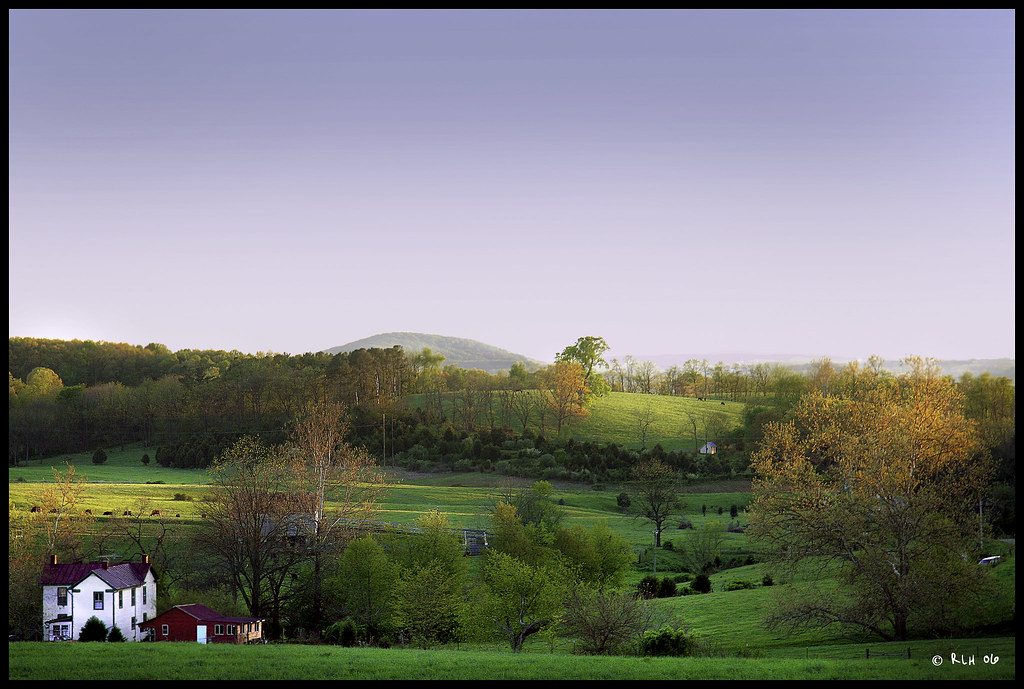 To probe this topic, E.J. Dionne Jr. column not only turns in a tremendous RUTHER GLEN dateline but also sounds out two Virginia politicos who know their way around Richmond's Capitol Square (to say nothing of Big Stone Gap, Farmville and Tappahannock):
[Virginia Gov. Tim] Kaine is broadly progressive in his views. But like Obama, whom he supported in the primaries, Kaine has been a vocal critic of partisanship. Indeed, Virginia Democrats have been gaining ground since 2001 partly by casting theirs as the party of nonpartisanship and Republicans as ideologues.
"We've been doing that here in Virginia for a while," said Mo Elleithee, a top Kaine consultant who worked for Hillary Clinton this year. "We did that with Warner in '01, Kaine in '05 and Democratic legislative candidates in '07."
Elleithee sees the path for Obama in Virginia as similar to Kaine's: Win just enough in the state's rural areas and overwhelm McCain in the Washington suburbs and among African Americans, notably in Hampton Roads.
Yet Elleithee also says McCain makes the state "very challenging" for Democrats, particularly because his war-hero status appeals to its large population of active and retired military voters
But the issue in Virginia may well be whether history is just history this year. Christopher Peace, a 31-year-old Republican who represents this area just north of Richmond in the state House of Delegates, argues that the election will be decided by "people in their mid-30s, married with two children and two dogs, professional families."
"A lot of that rhetoric about 'working families' is about them," Peace said. "They are not duty-bound to their party anymore. They are duty-bound to their pocketbooks." Such voters made Kaine governor, and they're the ones Obama needs to win.
Photo Courtesy Ranhar2
Saturday, July 12, 2008
Surging Towards Democrats
 Sun-Sentinel: Through May Democratic voter registration in Broward County is up 6.7% compared to GOP registrations, which grew 3%.
Democrats have posted even greater gains statewide, up 106,508 voters from January through May, compared with 16,686 for the Republicans.
Tuesday, July 8, 2008
McCain on Iraq's Independence
 From 2004 at the CFR:
 Question: "What would or should we do if, in the post-June 30th period, a so-called sovereign Iraqi government asks us to leave, even if we are unhappy about the security situation there?"
McCain: "Well, if that scenario evolves then I think it's obvious that we would have to leave because -- if it was an elected government of Iraq, and we've been asked to leave other places in the world. If it were an extremist government then I think we would have other challenges, but I don't see how we could stay when our whole emphasis and policy has been based on turning the Iraqi government over to the Iraqi people."
Here's McCain today. Not so clear.
Iraq, Standing For Independence
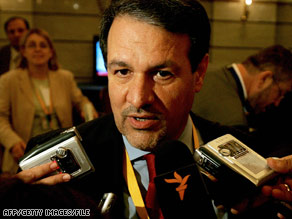 A deadline should be set for the withdrawal of U.S. and allied forces from Iraq, and the pullout could be done by 2011, an Iraqi government spokesman said Tuesday.
Ali al-Dabbagh said any timetable would depend on "conditions and the circumstances that the country would be undergoing." But he said a pullout within "three, four or five" years was possible.
"It can be 2011 or 2012," al-Dabbagh said. "We don't have a specific date in mind, but we need to agree on the principle of setting a deadline."
Al-Dabbagh's comments come as the United States and Iraq try to negotiate a framework governing the stationing of U.S. and allied troops beyond the end of 2008, when the current U.N. mandate for coalition forces expires. Bounce 2 CNN for the rest of the story.
Sunday, July 6, 2008
Saturday, July 5, 2008
Obama on Iraq
 Obama said he had not changed his position regarding Iraq troop withdrawals, but that he could "refine" his policy after assessing the situation there.
 This, of course, echoes what Obama said at the Sept. 26 NBC News/MSNBC debate from Dartmouth, N.H., (see full transcript below) when neither he nor Clinton nor Edwards would commit to having troops out by 2013.
"I think it's hard to project four years from now, and I think it would be irresponsible," Obama said then. "We don't know what contingency will be out there. What I can promise is that if there are still troops in Iraq when I take office, which it appears there may be unless we can get some of our Republican colleagues to change their mind and cut off funding without a timetable, if there's no timetable, then I will drastically reduce our presence there to the mission of protecting our embassy, protecting our civilians and making sure that we're carrying out counterterrorism activities there.
"I believe that we should have all our troops out by 2013, but I don't want to make promises not knowing what the situation's going to be three or four years out."
At a brief press conference on the tarmac here Thursday, the presumptive Democratic nominee said his plan to withdraw troops within 16 months had always been dependent on the facts on the ground and that he would "do a thorough assessment" of the situation when he visits Iraq, a trip he has said he wants to make before the election.
“My position has not changed but keep in mind what that original position was. I have always said that I will listen to commanders on the ground; I’ve always said that the pace of withdrawal would be dictated by the safety and security of our troops and the need to maintain stability," he said. "That assessment has not changed and when I go to Iraq and I have a chance to talk to some of the commanders on the ground, I’m sure I’ll have more information and will continue to refine my policies.”
Later, Obama came back out and addressed it again:
"Apparently I wasn’t clear enough this morning on my position with respect to the war in Iraq. I have said throughout this campaign that this war was ill conceived, that it was a strategic blunder and that it needs to come to an end. I’ve also said that I will be deliberate and careful in how we got out, that I would bring our troops home in the pace of one to two brigades per month and that that pace we would have our combat troops out in 16 months. That position has not changed.
"I have not equivocated on that position. I am not searching for maneuvering room with respect to that position. What I said this morning and what I will repeat because its consistent with what I have said over the last two years is that in putting this plan together, I will always listen to the advice of commanders on the ground but that ultimately I’m the person who is making the strategic decisions and it is my view that strategically for us to perpetuate this war in Iraq the way that John McCain has proposed and neglect the extraordinary problems that we’re seeing in Afghanistan, to continue spend $10 to 12 billion a month, to continue to put enormous burdens on our military and military families, is not the best way to make the American people safe.
"So we are going to go visit Iraq, I want to have conversations with commanders on the ground, Iraqi officials. When I come back, that information will obviously inform how we shape our plans moving forward. For example, does it-- what is the current training situation and how many residual troops might be needed in order to train Iraqis to stand up both the army and the police? What is the current posture in terms of negotiations between the various Iraqi factions on critical issues like how oil is distributed, oil revenues are distributed?
"But, you know, let me be as clear as I can be, I intend to end this war. My first day in office I will bring the joint chief of staff in and I will give them a new mission and that is to end this war responsibly, deliberately, but decisively. And I have seen no information that contradicts the notion that we can bring our troops out safely at a pace of one to two brigades a month and again that pace translates into having our combat troops out in 16 months time. ...
"[T]his is the same position that I had four months ago; it’s the same position that I had eight months ago; it’s the same position that I had 12 months ago."
Monday, June 30, 2008
Bush's War
 Bush signs $162 billion war spending bill
The legislation will bring to more than $650 billion the amount Congress has provided for the Iraq war since it began more than five years ago. For operations in Afghanistan, the total is nearly $200 billion, according to congressional officials.
Yes, that means $850 Billion...with $1 Trillion in sight, which will be passed by next year at this time. So I can go with the $200 Billion in Afghanistan but the $650 Billion in Iraq...where is the value for the USA in this Treasury expense?
Thursday, June 26, 2008
Quote of the Day
“There is a sense in this country that in my belief is anti-intellectual. There is almost a case to be made against smart people and that has penetrated I think from the top leadership in this country right through the ‘hood’ where people look down on folk who are academically prepared gifted and we’ve gotta change this culture,” he said. “America is fascinated by whether you can drink a beer. That’s not, that should not be the qualification for a president. A president ought to be able to lead the nation in a direction where young people aspire for the kind of genius that’s around this table.”
Geoffrey Canada, the president and CEO of Harlem Children's Zone at Carnegie Mellon University, Competitiveness Summit
Geoffrey Canada, the president and CEO of Harlem Children's Zone at Carnegie Mellon University, Competitiveness Summit
2nd Amendment
 In a dramatic moment on the last day of this term, the Supreme Court declared (5-4) for the first time that the Second Amendment protects an individual's right to self-defense and gun ownership.
 For most of the last century, the interpretation of the Second Amendment has been that the right to bear arms is a collective right, such as with military service; Thursday's ruling says gun ownership is an individual right.
In Thursday's ruling, Justice Antonin Scalia, writing for four colleagues, said the Constitution does not permit
"the absolute prohibition of handguns held and used for self-defense in the home." He added, however, that nothing in Thursday's ruling should "cast doubt on long-standing prohibitions on the possession of firearms by felons or the mentally ill, or laws forbidding the carrying of firearms in sensitive places such as schools and government buildings."
In dissent, Justice John Paul Stevens wrote that the majority of justices
"would have us believe that over 200 years ago, the Framers made a choice to limit the tools available to elected officials wishing to regulate civilian uses of weapons." Stevens said such evidence "is nowhere to be found."
Wednesday, June 25, 2008
Tuesday, June 24, 2008
Sunday, June 22, 2008
UN classifies rape a 'war tactic'
 The UN Security Council has voted unanimously in favour of a resolution classifying rape as a weapon of war.
 The document describes the deliberate use of rape as a tactic in war and a threat to international security.
UN Secretary General Ban Ki-moon said violence against women had reached "unspeakable proportions" in some societies recovering from conflict.
The UN is also setting up an inquiry to report next June on how widespread the practice is and how to tackle it.
Human rights groups hailed the resolution as historic.
To read full article Bounce 2 BBCNews Click for BBC NEWS Video
Saturday, June 21, 2008

Who Owns The West?
 This map details the percentage of state territory owned by the federal government. The top 10 list of states with the highest percentage of federally owned land looks like this:
Nevada 84.5%
Alaska 69.1%
Utah 57.4%
Oregon 53.1%
Idaho 50.2%
Arizona 48.1%
California 45.3%
Wyoming 42.3%
New Mexico 41.8%
Colorado 36.6%
Notable is that all these states are in the West (except Alaska, which strictly speaking is also a western state, albeit northwestern). Also notable is the contrast between the highest and the lowest percentages of federal land ownership. The US government owns a whopping 84.5% of Nevada, but only a puny 0.4% of Rhode Island and Connecticut. Courtesy Strange Maps
The Stat That Counts
 Is this one:
 Among independents — the group that usually determines election outcomes — Obama leads 48%-36%.
Obama on FISA
 Obama on the FISA 'Compromise' ...
 "Given the grave threats that we face, our national security agencies must have the capability to gather intelligence and track down terrorists before they strike, while respecting the rule of law and the privacy and civil liberties of the American people. There is also little doubt that the Bush Administration, with the cooperation of major telecommunications companies, has abused that authority and undermined the Constitution by intercepting the communications of innocent Americans without their knowledge or the required court orders.Courtesy Talking Points Memo
"That is why last year I opposed the so-called Protect America Act, which expanded the surveillance powers of the government without sufficient independent oversight to protect the privacy and civil liberties of innocent Americans. I have also opposed the granting of retroactive immunity to those who were allegedly complicit in acts of illegal spying in the past.
"After months of negotiation, the House today passed a compromise that, while far from perfect, is a marked improvement over last year's Protect America Act.
"Under this compromise legislation, an important tool in the fight against terrorism will continue, but the President's illegal program of warrantless surveillance will be over. It restores FISA and existing criminal wiretap statutes as the exclusive means to conduct surveillance - making it clear that the President cannot circumvent the law and disregard the civil liberties of the American people. It also firmly re-establishes basic judicial oversight over all domestic surveillance in the future. It does, however, grant retroactive immunity, and I will work in the Senate to remove this provision so that we can seek full accountability for past offenses. But this compromise guarantees a thorough review by the Inspectors General of our national security agencies to determine what took place in the past, and ensures that there will be accountability going forward. By demanding oversight and accountability, a grassroots movement of Americans has helped yield a bill that is far better than the Protect America Act.
"It is not all that I would want. But given the legitimate threats we face, providing effective intelligence collection tools with appropriate safeguards is too important to delay. So I support the compromise, but do so with a firm pledge that as President, I will carefully monitor the program, review the report by the Inspectors General, and work with the Congress to take any additional steps I deem necessary to protect the lives - and the liberty - of the American people."
Another look at FISA from Andrew Sullivan and Glenn Greenwald
Friday, June 20, 2008
Obama’s Public Funding Opt-Out

CQ Politics addresses the questions concerning the state of public funding within the context of Obama’s decision.
1. How does the presidential public financing system work?
There are separate public financing systems for the primary and general presidential elections. Both are optional, and a candidate is free to participate in one or the other, or both, depending on qualifications.
The general election financing program covers the period of time between the candidate’s official nomination at the party convention and election day in November. The presidential nominee for each major party is automatically eligible for public funding. Minor party candidates may also qualify for partial funding, determined by their party’s vote totals in the preceding presidential election. If he or she chooses to participate, the candidate receives a grant adjusted for inflation. For 2008, that amount is approximately $84.1 million. The candidate may not raise or spend any additional funds, except to cover legal and accounting expenses.
2. Why did Obama decide to opt out of the public financing system?
Obama said he made the decision because “the public financing of presidential elections as it exists today is broken, and we face opponents who’ve become masters at gaming this broken system.” But the bottom line is the campaign does not want to stop raising and spending its own money. The soon-to-be Democratic nominee has already shown the capacity to raise much more than $84 million over the same roughly two-month period that would be covered in the general election campaign. He raised $56.8 million in February, alone. Given his fundraising abilities, and considering Sen. John McCain ’s own funding struggles, Obama is likely to have a huge advantage over his Republican rival by the time the conventions roll around. Taking public funding would neutralize that.
In making the decision, the Obama campaign no doubt weighed the fact that the Republican National Committee presently has a significant cash advantage over the Democratic National Committee – $40.6 million to $4.4 million at the end of April — putting the Republican party in a position to outspend the Democrats on presidential race.
The parties and other outside interest groups can spend unlimited amounts to influence the election. In 2004, the spending totalled more than $200 million.
Some say it is hypocritical of Obama to have went back on his early statement...he is a politician. If I were advising Obama I would counter this argument by stating, "our campaign is a grass roots network of donors and volunteers. The average donation is less than $100...coming from hard working Americans...the backbone of our great democracy. We are not following the McCain strategy of tapping lobbyists and corporate giants as if they were offshore oil wells."
Thursday, June 19, 2008
2 Cents for Drilling in ANWR
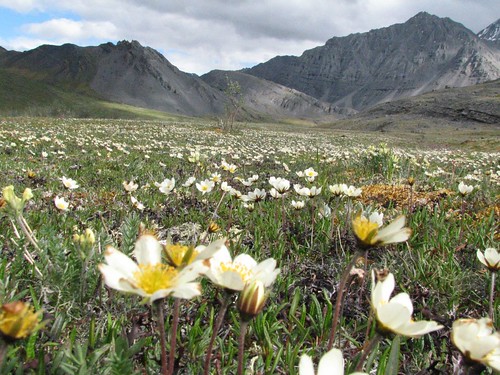 John McCain wants to open up Artic National Wildlife Refuge (ANWR) to oil drilling in order to provide more energy independence for the United States and alleviate high prices at the gas stations. A recent economic analysis from the Energy Information Administration:
The opening of the ANWR 1002 Area to oil and natural gas development is projected to increase domestic crude oil production starting in 2018. In the mean ANWR oil resource case, additional oil production resulting from the opening of ANWR reaches 780,000 barrels per day in 2027 and then declines to 710,000 barrels per day in 2030 ... Crude oil imports are projected to decline by about one barrel for every barrel of ANWR oil production ... Additional oil production resulting from the opening of ANWR would be only a small portion of total world oil production, and would likely be offset in part by somewhat lower production outside the United States. The opening of ANWR is projected to have its largest oil price reduction impacts as follows: a reduction in low-sulfur, light crude oil prices of $0.41 per barrel (2006 dollars) in 2026 for the low oil resource case, $0.75 per barrel in 2025 for the mean oil resource case, and $1.44 per barrel in 2027 for the high oil resource case, relative to the reference case.
The median case suggests the effect on gasoline prices in 2025 will be a mere $0.02 a gallon. The immediate effect will be zero as we’ll have to wait a decade to see any oil from ANWR. If this is Bush’s and McCain’s answer to today’s high gasoline prices, it is no answer at all.
Wednesday, June 18, 2008
McCain's Energy Solutions Impact Environment
 By calling for an end to the federal ban on offshore oil drilling, John McCain is placing a risky bet. He is wagering that skyrocketing gas prices have finally reached a tipping point, a threshold moment that has led voters to rethink their strong and long-held opinions against coastal oil exploration.
The stakes couldn’t be higher: If he is wrong, McCain will have seriously damaged his chances in two key states with thousands of miles of coastline — California and Florida — and where opposition to offshore oil drilling has been unwavering. And he will have undermined some of his closest political allies in those states and others, including potential fall battlegrounds such as Virginia and North Carolina.
In addition, Sen. John McCain is calling for construction of 45 new nuclear reactors by 2030 and pledging $2 billion a year in federal funds to make clean coal a reality. He says the measures will reduce American dependence on foreign oil.
McCain is rolling the dice on these proposals and hoping that people are willing to sacrifice their environments for cheaper energy. I would not be advising McCain in this way but his advisers are feeling the pinch early to curtail Obama's popularity.
These proposals further link John McCain to President Bush see video below.
Monday, June 16, 2008
China's View...
"Indeed, Sen. Barack Obama does not at all represent the white Anglo-Saxon protestants (WASP), those who belong to the group of middle- and upper-class Americans descended from the British or Northern European settlers, generally regarded as the traditional dominant or privileged group in the U.S. His success, nevertheless, is because he does not underscore his racial features, and has even intentionally drawn a clear line with those radical blacks. So, it can be said that Obama triumphs either because of his skin color or not because of it. He has a different skin color (with whites) but shares the "same American background".
Obama represents a superb talent or gifted graduate from a top-rate American university, and he is the representative of the racial merging rather than a symbol for assimilation. So his rise has not done away with privileges for the white Americans but reinforces their privileges on the contrary," For the full read Bounce 2 China's People Daily
Note: The class comments by the Communists Chinese and that American business (Walmart) has tied the American economy to China along with past administrations from Nixon to Bush 43. Should say Made in China by the Communists....
Obama represents a superb talent or gifted graduate from a top-rate American university, and he is the representative of the racial merging rather than a symbol for assimilation. So his rise has not done away with privileges for the white Americans but reinforces their privileges on the contrary," For the full read Bounce 2 China's People Daily
Note: The class comments by the Communists Chinese and that American business (Walmart) has tied the American economy to China along with past administrations from Nixon to Bush 43. Should say Made in China by the Communists....
Sunday, June 15, 2008
Tiger Eyes 14th Major
What a Father's Day it would be for Tiger Woods to earn his 14th Major Championship...Tiger's highlights from his third round at Torrey Pines.
Sandbagging
Obama filled some sandbags in Southern Illinois yesterday, a moment his campaign was careful to avoid over-hyping as a photo-op, which it inevitably was.
Comments from Andrew Sullivan:
So was this an obvious photo-op? Yes, but where was President Bush after Katrina, the largest natural disaster in US History...in the White House. Perhaps President Bush is just a cut above all the canned photo-ops or he just prefers the military photo-ops, remember, May 1, 2003 USS Lincoln
Comments from Andrew Sullivan:
Very deft p.r. from the Obama camp. This is the kind of thing a president would do - and the contrast with Bush after Katrina is powerful:
So was this an obvious photo-op? Yes, but where was President Bush after Katrina, the largest natural disaster in US History...in the White House. Perhaps President Bush is just a cut above all the canned photo-ops or he just prefers the military photo-ops, remember, May 1, 2003 USS Lincoln
Saturday, June 14, 2008
Friday, June 13, 2008
Impasse in US-Iraqi forces talks
 Iraqi PM Nouri Maliki has said that talks with the US on a long-term agreement allowing US forces to remain in Iraq have "reached an impasse".
 Speaking in the Jordanian capital, Amman, Mr Maliki said the American demands infringed Iraqi sovereignty.
With the UN mandate for US forces to be in Iraq expiring at the end of 2008, the White House wants a deal by July.
Bounce 2 BBC News to read more.
Where Gasoline Prices Hit the Hardest
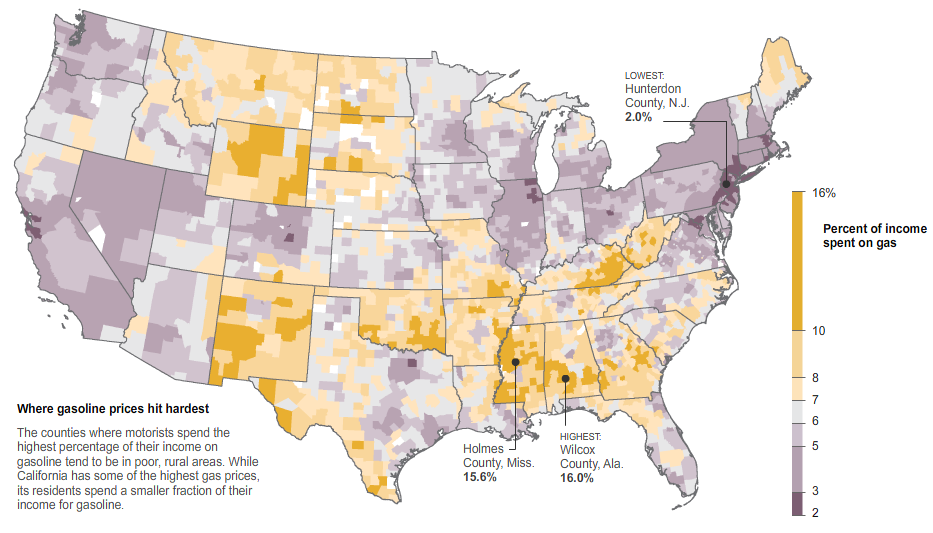 Click on map to enlarge
 “This crisis really impacts those who are at the economic margins of society, mostly in the rural areas and particularly parts of the Southeast,” said Fred Rozell, retail pricing director at the Oil Price Information Service, a fuel analysis firm. “These are people who have to decide between food and transportation.”
A survey by Mr. Rozell’s firm late last month found that the gasoline crisis is taking the highest toll, as a percentage of income, on people in rural areas of the South, New Mexico, Montana, Wyoming and North and South Dakota.
With the exception of rural Maine, the Northeast appears least affected by gasoline prices because people there make more money and drive shorter distances, or they take a bus or train to work.
But across Mississippi and the rural South, little public transit is available and people have no choice but to drive to work. Since jobs are scarce, commutes are frequently 20 miles or more. Many of the vehicles on the roads here are old rundown trucks, some getting 10 or fewer miles to the gallon. Courtesy The Oil Drum
Thursday, June 12, 2008
Wednesday, June 11, 2008
Bush to Iran: 'All options' are open over nukes
President urges diplomacy over uranium enrichment during European visit
President Bush threatened Iran on Wednesday with more sanctions if it fails to stop enriching uranium and said all options were on the table to thwart Tehran's nuclear ambitions.
Does this hurt McCain or Obama?
President Bush threatened Iran on Wednesday with more sanctions if it fails to stop enriching uranium and said all options were on the table to thwart Tehran's nuclear ambitions.
"Both the chancellor and my first choice of course is to solve this diplomatically," Bush told a joint news conference with Merkel.
Does this hurt McCain or Obama?
Tuesday, June 10, 2008
The 101 on Oil Supply

Here is just a snippet:
The oil production of Saudi Arabia and OPEC has been sufficiently variable over time that it is difficult to make predictions, simply based on trends. OPEC's production, and in particular Saudi Arabia's production, is down in both 2006 and 2007. It is hard to know exactly what this means.
According to the US Energy Information Administration, Saudi Arabia's highest oil production was in 1980, when it produced 9.9 million barrels a day. Its recent peak was in 2005, when it produced 9.6 million barrels a day. In 2006, Saudi production dropped to an average of 9.2 million barrels a day. In 2007, production from February to August was only 8.6 million barrels a day.
When OPEC agreed to raise quotas near the end of 2007, Saudi Arabia did in fact raise its production. Its highest single month of production in 2007 was 9.1 million barrels a day, in December 2007. This represented a 500,000 barrel a day increase over its earlier low production of 8.6 million barrels a day, but still left production below both the 2006 average of 9.2 million barrels a day and the 2005 average of 9.6 million barrels a day.
One question too is whether this increase will continue, or if it is just temporary. It is sometimes possible to squeeze out a little extra production for a while, but then production drops back to a more normal level. Saudi Arabia originally planned to have an upgraded field (Khursaniyah) on line by late 2007, which was expected to produce an extra 500,000 barrels a day of oil. It may have thought it could make a spurt of extra production until this field came on line. Now the Khursaniyah field upgrade has been delayed until late 2008. Will Saudi Arabia be able to continue the increase, without the assistance of the Khursaniyah field?
Another question is why OPEC refused to raise its quota further on March 5, 2008. Is Saudi Arabia now really at the peak of what it can produce? It claims to have more production available in reserve. We know that Saudi Arabia has some poor quality oil off-line because the oil requires special processing which is not yet available in any refinery. Is this the only Saudi production off-line? Are other OPEC countries also unable to produce more? To read more Bounce 2 The Oil Drum
Monday, June 9, 2008
The Joshua Generation
 A source close to the Obama campaign tells The Brody File the following:
"The Joshua Generation project will be the Obama campaign's outreach to young people of faith. There's unprecedented energy and excitement for Obama among young evangelicals and Catholics. The Joshua Generation project will tap into that excitement and provide young people of faith opportunities to stand up for their values and move the campaign forward."
The Brody File said awhile back that the Obama campaign would be making a concerted effort to attrack Evangelicals and Catholics to their campaign.
Yes, the Obama campaign understands that the issue of abortion is a problem for some voters of faith. They respect that and understand if some just simply can't come on board because of that. However, they look at this project as a way of broadening the values discussion. Poverty, Darfur, Climate Change and yes, even the war are issues younger Evangelicals may be able to see eye to eye on with the Obama campaign.
Whatever you think of the "Joshua Generation Project," you have to give the campaign their due because they are making concerted efforts to NOT ignore faith voters. In my reporting, I can tell you this is not a contrived effort.
The folks behind this believe in not only the mission of winning over faith voters to Obama but the larger mission of not ignoring faith voters when it comes to politics.
Obama spoke about the "Joshua Generation" in a speech he gave in Selma, Alabama in March of 2007. It will give you an good idea of where the Obama campaign is heading with this effort....
Barack Obama: The winner
 I wonder if Americans have yet fully absorbed what they have just done. This past week - 41 years after the Supreme Court struck down the last bans on interracial marriage and only 40 years after black America exploded in riots after Martin Luther King Jr was assassinated - a black man became the favourite to be the next president of the United States.
 His convention acceptance speech, a date scheduled long before Barack Obama became the Democratic nominee, will occur by exquisite timing 45 years to the day after King’s “I have a dream” speech. The states that were critical to his nomination were Illinois, Lincoln’s home state, and the four southern states most associated with slavery: South Carolina, Georgia, Virginia and North Carolina.
Much has been made, and rightly so, of how Obama’s rise changes America’s relationship to the rest of the world. What has been less appreciated is how deeply Obama’s victory alters America’s relationship to itself.
There is no deeper division in America than race. Slavery was America’s original sin. Even after its abolition, America was effectively in large swathes an apartheid society until the 1970s. It was race that bloodily tore the country apart a century and a half ago in the civil war, killing nearly 2% of the population (only 0.3% of Americans died in the second world war). It was race that convulsed America in the last deep internal crisis in the 1960s. And last Tuesday night, Obama’s first words were a tribute to his grandmother, a white woman who had effectively raised him.
Obama is not just potentially America’s first black president. He would be America’s first bi-racial president, in many ways a more integrative event. The cynics demand that we cease this kind of historical hyper-ventilation. It is deemed a function of drinking the Obama Kool-Aid, of insufficient scepticism, of Obamania.
But you have to have a heart of stone not to see what this has already done to race relations in America. Finish the reading after the Bounce 2 Times Online
Bipartisanship and Obama
.jpg) The notion that Barack Obama has no bipartisan achievements in the Congress is untrue and unfair, as Hilzoy has definitively demonstrated. Senators Lugar and Obama witness the process of munitions elimination at the Donetsk State Chemical Product Plant(2006).
The notion that Barack Obama has no bipartisan achievements in the Congress is untrue and unfair, as Hilzoy has definitively demonstrated. Senators Lugar and Obama witness the process of munitions elimination at the Donetsk State Chemical Product Plant(2006).
Saturday, June 7, 2008
Friday, June 6, 2008
Rogers Says the Crude Bull Market Has `Years to Go'
Jim Rogers, chairman of Rogers Holdings, said the increase in the price of crude oil has ``years to go'' as known sources of petroleum are dwindling.
``I know that unless someone discovers a lot of oil, it can go to $150, $200'' a barrel, Rogers said in a Bloomberg Television interview. ``The facts are the world is running out of known oil reserves.''
Crude oil for July delivery rose $1.62, or 1.3 percent, to $123.92 a barrel at 9:51 a.m. on the New York Mercantile Exchange, after earlier dropping to $121.61, the lowest since May 15. Futures, which reached a record $135.09 a barrel on May 22, are up 89 percent from a year ago.
Rogers said he bought airline stocks around the world today, saying bankruptcies show the sector may be nearing a bottom. ``Bankruptcies are signs of bottoms, not signs of tops,'' he said
Click Video Here
``I know that unless someone discovers a lot of oil, it can go to $150, $200'' a barrel, Rogers said in a Bloomberg Television interview. ``The facts are the world is running out of known oil reserves.''
Crude oil for July delivery rose $1.62, or 1.3 percent, to $123.92 a barrel at 9:51 a.m. on the New York Mercantile Exchange, after earlier dropping to $121.61, the lowest since May 15. Futures, which reached a record $135.09 a barrel on May 22, are up 89 percent from a year ago.
Rogers said he bought airline stocks around the world today, saying bankruptcies show the sector may be nearing a bottom. ``Bankruptcies are signs of bottoms, not signs of tops,'' he said
Click Video Here
Thursday, June 5, 2008
Mugabe's goons threaten to burn U.S. diplomats alive
 Apparently you don't have to be an opposition leader seeking democratic reforms to get arrested in Zimbabwe -- just being a foreign diplomat can be enough. U.S. and British diplomats were seized by Zimbabwean police today while visiting victims of political violence carried out by the government of President Robert Mugabe, whom human rights groups accuse of creating famine and starvation for political purposes.
Here's James D. McGee, the U.S. ambassador to Zimbabwe, describing the incident to CNN:
Police put up a roadblock, stopped the vehicles, slashed the tires, reached in and grabbed telephones from my personnel, and the war veterans (Mugabe's supporters) threatened to burn the vehicles with my people inside unless they got out and accompanied police to a station nearby."
McGee added that his embassy felt the orders were "coming directly from the top." Whoever gave the orders, threatening to burn foreign dignitaries alive is a step beyond the usual Mugabe bullying. It's sickening.
Will this be the moment when Thabo Mbeki finally stops covering for the crazy man next door? As the leader of the powerhouse, a country with a long history of friendship and cooperation with Mugabe, the South African president has unique leverage on Harare, but he has, if anything, shielded Mugabe from accountability. It's time for President Bush to pressure Mbeki and other African leaders to handle the mess in their own backyards, and if that doesn't work, take matters to the Security Council. The apologetics need to end now. Courtesy Foreign Policy Passport
For The First Time In Her Adult Life ...
 "The United States of America is an extraordinary country. It is a country that has overcome many, many, now years, decades, actually a couple of centuries, of trying to make good on its principles. And I think what we are seeing is an extraordinary expression of the fact that 'We the People' is beginning to mean to all of us," - Condi Rice.
 Beginning to mean? Where's Hannity?
Wednesday, June 4, 2008
Obama @ AIPAC
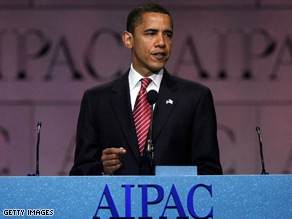 Barack Obama has strongly backed Israel in his first foreign policy speech since becoming the presumptive Democratic presidential nominee -- just two days after he was accused of naivety by Republican challenger John McCain.
 Obama said:
"Any agreement with the Palestinian people must preserve Israel's identity as a Jewish state, with secure, recognized and defensible borders. Jerusalem will remain the capital of Israel, and it must remain undivided."
John McCain, speaking at the same gathering Monday, attacked Obama's Middle East policy. In particular he criticized Obama's stated willingness to meet with the leaders of countries like Iran, as well as voting against a measure to label Iran's Revolutionary Guard a terrorist organization.
Obama said:
"Contrary to the claims of some, I have no interest in sitting down with our adversaries just for the sake of talking. But as president of the United States, I would be willing to lead tough and principled diplomacy with the appropriate Iranian leader at a time and place of my choosing -- if, and only if it can advance the interests of the United States,"
Obama Names Veep Search Team
 Sen. Barack Obama's vice presidential search team will consist of Caroline Kennedy, former Deputy Attorney General Eric Holder and Jim Johnson, former CEO of Fannie Mae, according to the AP.
Johnson led the vice presidential searches for both Sen. John Kerry in 2004 and former Vice President Walter Mondale in 1984.
Ben Smith: "Notably, none of these figures are particularly close to the Clintons, and the choice of Kennedy in particular -- the scion of a different dynasty -- may help damp down speculation that Clinton is in the running."
The Audacity Of Now
 Something has already been done, hasn't it? A reader writes:
Tomorrow I will go to the African American cemetery outside of Chicago where my great-grandparents, grandparents, aunts, uncles, friends, neighbors, and my mother and father are buried. And I will tell them that they were right -- that if we studied hard, worked hard, kept the faith, fought for justice, prayed, that this day would come.Courtesy Andrew Sullivan
And it has.
What would Abraham Lincoln and Martin Luther King, Jr. think of this day?
Tuesday, June 3, 2008

Monday, June 2, 2008
Sunday, June 1, 2008
What Does Today's Primary Mean?
 (Q) Not much, according to this reader:
I'm a Puerto Rican reader and I currently live in PR after living a good chunk of my adult life in the US. I've been following the primaries in the US closely. I studied in the States, have a masters degree. Out of my very highly educated friends, I'm the only one who's paying attention to what's going on in this election year in the US.
You cannot use Puerto Rico as a basis for explaining any phenomenon in the US.
We are a colony. We do not participate in any of the US political processes, really. There isn't a general understanding of US national politics, nor of the "Republican" v. "Democrat" mentality. We are consumed by our local politics and whether we should become a state, an independent country or remain as we are.
Clinton's victory here means nothing. There's a lot of name recognition and her husband is a rock star here. That's it. Don't extrapolate the results into anything. We are not Latinos in the same way that Mexican Americans are Latinos. Our vote has nothing to do with Obama's "problem" with Latinos. Anyone trying to frame the PR vote into anything other than name recognition, has no knowledge of PR at all and is, in short, full of it.
Courtesy Andrew Sullivan
US Underestimating Inflation
On Wednesday, Dow Chemical Chief Executive Andrew Liveris made a high-profile announcement that Dow would increase its prices by as much as 20%, starting June 1. Dow, the top U.S. chemical company, said the plan was necessary to offset the impact of rising costs for energy and related raw materials. Over the past year, Dow has already increased its price by about 12%, but those price changes have been phased in gradually rather than implemented all at once.
In the interview, Liveris said he thinks the U.S. is underestimating the level of inflation in the economy and he expects the rise in energy costs is beginning to destroy demand. Liveris expects the price increases his company made will eventually be passed on to the consumer: Bounce 2 CNBC Video
In the interview, Liveris said he thinks the U.S. is underestimating the level of inflation in the economy and he expects the rise in energy costs is beginning to destroy demand. Liveris expects the price increases his company made will eventually be passed on to the consumer: Bounce 2 CNBC Video

Friday, May 30, 2008

If they were running for president of Italy, England, France, Germany...
 (Q) A new Telegraph survey finds Obama dominant in polls of European countries, with McCain in the single digits. McCain is in the running, oddly enough, only in the one country that isn't much of an ally: Russia.
Obama is especially popular in Italy, where a remarkable 70 per cent would vote for him if they could.
In France, historically the European country with the strongest anti-American sentiment, 65 per cent would back Mr Obama. In Germany, the Democratic Senator would get 67 per cent of the vote - while Mr McCain would receive a derisory six per cent.
Mr Obama appears to have made less of an impact in Britain than elsewhere in Europe. A relatively modest 49 per cent of Britons would vote for him, while 14 per cent would back Mr McCain - twice the totals favouring the Republican candidate in Germany or France....
The only country where Mr McCain can rival his opponent's popularity is in Russia, where anti-American feeling is strongest. The Republican appears to have made a striking impression on Russians, with 24 per cent saying they would vote for him if they could - a mere seven points behind Mr Obama.
Thursday, May 29, 2008
Wednesday, May 28, 2008
Previewing Saturday's DNC Rules Committee Meeting
 Here's some "pre-game" analysis:
1. While the room will be packed with lawyers, everyone should realize the decision will be less about actual rules than the politics and perceptions of the Democratic primary process. There is no way the DNC will let a rules committee decide the victor of the nomination.
2. Don't expect many fireworks. The Obama campaign is urging its supporters to stay quiet and protests by Clinton supporters could backfire and cause the committee to reject the challenges entirely.
3. The most likely outcome is that the rules committee will reinstate 50% of the Florida and Michigan delegates. According to a memo, party lawyers don't believe they have the authority to do any more than that.
4. The twist, as First Read notes, are the "uncommitted" delegates from Michigan's primary. "If the Rules committee decides to accept the January primary results then it's not clear, via the DNC charter, that it's within the party's rules to assign uncommitted delegates to Obama."
5. Although she will probably have succeeded in changing the "magic number" for the nomination, Sen. Hillary Clinton will still likely be disappointed by the committee's decision. The math doesn't work for her now and won't work for her after Saturday either.
Think Gas is High? Try Europe
 On Tuesday, hundreds of British truck drivers in London and Cardiff brought traffic to a crawl in a campaign to get their government to lower taxes on diesel fuel, which now costs over $11 per U.S. gallon (3.8 liters). Other businesses owners who rely heavily on gas use — including farmers, ambulance and taxi drivers, and private bus companies — have joined the protest movement or are preparing to do so.
Why so high?
One big reason for the difference is that European governments put a much higher tax burden on fuel than the U.S. does. State and federal taxes currently make up just 11%of the pump price in the U.S., according to the Energy Information Administration; in France and the U.K., taxes account for an average of around 70%. Bounce 2 Time to read full article.
Tuesday, May 27, 2008
Sunday, May 25, 2008
Meet The Press
A few things struck me about this. Number one, race isn't an "obstacle," racism is an obstacle. The problem isn't that Obama is black, the problem is that some folks have a problem with the fact that Obama is black. Courtesy Jack and Jill Politics
Saturday, May 24, 2008
A Real Shocker!
 A Newsweek poll homes in:
Who exactly are these high Racial Resentment Index voters? A majority, 61 percent, have less than a four-year college education, many are older (44 percent were over the age of 60 compared to just 18 percent under the age of 40) and nearly half (46 percent) live in the South.
And we wonder why Clinton won Appalachia....
Friday, May 23, 2008
Profiling California's war dead
 A census of some of the best of America. And how moving that so many were immigrants:
At 7, Victor H. Toledo-Pulido was smuggled across the border from Mexico through rugged mountains into California. He and another soldier were killed in May 2007 when a roadside bomb exploded near their vehicle southeast of Baghdad.Read more after the Bounce 2 LA Times
"They judge us, and they say we just come to take their jobs and positions, but we also make sacrifices. Victor worked since he was little, in the fields and in restaurants," his mother, Maria Gaspar, said after the 22-year-old Mexican was killed in Iraq. "He was Mexican, but he thought like an American. And he gave his life for this country."
Dozens more were the children of immigrants, including Bunny Long, 22, a Marine lance corporal whose parents came from Cambodia, where the Khmer Rouge imprisoned them for four years in a labor camp.
"This is our home," his father, Sim Long, said after his son died. "I'm very proud that Bunny was able to give back to his country. Our country."
Thursday, May 22, 2008
Petraeus: More troop cuts possible
Gen. David Petraeus, the top U.S. commander in Iraq, said Thursday that a decision on Iraq troop levels is likely by September...
The Border Fence
 As the Department of Homeland Security pushes to complete 670 miles of fencing along the Mexican border by the end of this year, it is confronting the sharpest resistance yet...
Homeland Security secretary, Michael Chertoff:
"I don't believe the fence is a cure-all," Chertoff said. "Nor do I believe it is a waste. Yes, you can get over it; yes, you can get under it. But it is a useful tool that makes it more difficult for people to cross. It is one of a number of tools we have, and you've got to use all of the tools."
Patricio Ahumada Jr., the mayor of Brownsville, Texas:
"Homeland Security is using it to give a false sense of security to middle America that it will keep illegal immigrants and terrorists out, but it just isn't true."To read on Bounce 2 International Herald Tribune
Wednesday, May 21, 2008
Racial Attitudes: Kentucky and Oregon Comparison

Kentucky:
About one in five whites said race played a role in choosing a candidate Tuesday _ on par with results in several other Southern states. Nine in 10 of that group backed Clinton _ the highest proportion yet among the 28 states where that question has been asked in exit polls.
Only three in 10 whites who said race was a factor said they would vote for Obama should he oppose McCain in November. Nearly four in 10 said they would back McCain, while the rest said they wouldn't vote.
Oregon:
...only one in 10 voters in Oregon said the race of the candidates was important, one of the lowest proportions in primary states this year. They were evenly divided between the two Democrats, but heavily backed Obama when he was pitted against McCain.
Magic Numbers
 With just 86 pledged delegates up for grabs in Puerto Rico, Montana and South Dakota, and 212 remaining undeclared superdelegates, Obama just needs about 20-25 superdelegate endorsements to hit the magic 2,026 number to claim the Democratic nomination, assuming he just splits the remaining 86 in half. But it’s quite likely that the magic number is going to change, because it appears that the DNC Rules and Bylaws Committee has every intention of coming up with some sort of Florida/Michigan compromise. The one number we know it won’t be is 2,210 -- the number the Clinton campaign keeps using, because there seems to be little appetite among DNC types (still angry at the calendar mess those two states created) from seating the delegations in full. That means some sort of cut. The most likely magic numbers would be 2,131 or 2,118, which would cut the two delegations in half, either keeping the supers fully in tact (the former number) or cutting them in half, too (the latter). And so if you have those new magic numbers, then Obama needs approximately 50 new superdelegate endorsements to take enough delegates off the table that there is no mathematical possibility for Clinton to secure enough delegates to win the nomination without somehow convincing Obama pledged delegates and/or supers to switch.
Sunday, May 18, 2008
Obama + PDX = 75,000
 (Q) Some 75,000 people flocked to Portland’s waterfront Sunday to watch Barack Obama speak, making it the biggest rally the campaign has held to date. Thousands stood on the lawn, dozens watched from boats and from the bridge stretching across the Willamette River. A few kayakers held their paddles and tried to keep their kayaks straight as they watched the candidate, who stood on a makeshift platform. Bounce 2 First Read
 Andrew Sullivan: I ask again: who else can do this? In any party? Anywhere?
Saturday, May 17, 2008
Friday, May 16, 2008
Subscribe to:
Posts (Atom)