Monday, January 21, 2008


Saturday, January 19, 2008
Obama and the Gipper

No one is surprised when Republican Presidential candidates invoke Ronald Reagan like they're counting prayer beads, but perhaps a better measure of the Gipper's political legacy is the fracas it has kicked up among the Democrats. This week, Barack Obama had the blaspheming temerity to acknowledge that Reagan was a transformational President.
"I think Ronald Reagan changed the trajectory of America, in a way that Richard Nixon did not, and in a way that Bill Clinton did not," the Senator told the Reno Gazette-Journal. "He put us on a fundamentally different path because the country was ready for it. I think they felt like with all the excesses of the 1960s and 1970s and government had grown and grown but there wasn't much sense of accountability in terms of how it was operating. . . . He just tapped into what people were already feeling, which was, 'We want clarity, we want optimism.'"
The obvious context of Mr. Obama's remarks was his case for "change" versus Hillary Clinton's "experience." But the Internet left went bananas, and John Edwards and Mrs. Clinton ripped into Mr. Obama as well. Mr. Edwards cited the "extraordinary damage" Reagan supposedly visited on the country, while in a conference call with reporters yesterday, Clinton surrogate and Baby Boom liberal Barney Frank said he was "stupefied" by Mr. Obama's "explicit endorsement" of the notion that the GOP is "the party of ideas."
According to this paranoid style, the "excesses" Mr. Obama referenced were liberal emblems like the civil rights, antiwar and women's movements, the Great Society's social welfare programs and the like. Please. More likely, the Illinois Senator was thinking of the actual reasons for Reagan's 1980 success: double-digit inflation, marginal tax rates as high as 70%, high unemployment, Soviet Communism on the march in Afghanistan, hostages in Tehran . . .
Mr. Obama is trying to associate the present with these crises -- and thus frame his candidacy as the advent of a liberal Reagan -- though whatever problems we now face are several orders of magnitude removed from those that gave rise to Reagan. And unlike Mr. Obama, Reagan campaigned on forthright policy reforms -- substance -- and not merely a change in style.
It was less his "optimism" or what the country "felt," as Mr. Obama had it, than it was Reagan's ideas that account for his success. He shifted electoral coalitions and realigned the U.S. political center to the right because he governed with a genuinely new domestic agenda and approach to foreign policy -- and it worked. Still, we suspect Mr. Obama is smarter than his Democratic critics in evoking Reagan as the example he wants to emulate, and it says something about the breadth of his political ambitions that he would do so.
The episode is most telling, though, for what it says about the ancient mariners of the Democratic Party and how little they've changed. Supposedly Mr. Obama committed a grievous blunder by nodding at the achievement of one of the most consequential Presidencies of the 20th century. If the rest of the Democrats can't even recognize the same, it suggests that the change they have in mind is back to the 1960s and '70s. Courstesy Wall Street Journal
How the White House may be won -- in the West

I am looking out the window of my office on the Seattle waterfront. On a clear day, I would see the deep blue of Puget Sound and the jagged peaks of the Olympics to the west. Today, there's nothing to see but the fuzzy outline of a container ship with its lights blurred by a thick gray mist.
At this moment, the race for president seems as foggy as the scene out my window. Burned by bad polls and the errors of conventional wisdom, the big-time pundits are no longer predicting which of the two leading Democratic contenders will get the chance to make history by becoming either the first woman or the first African-American to win a major party nomination. And the will of Republican voters is even more unfathomable, inclined as they seem to be to split their votes four or five ways.
All this uncertainty makes one thing almost certain: voters in the West will, for once, have a powerful voice in clarifying who the eventual nominees will be. Nevada became a prime battleground for the Democrats this last week. On Super Tuesday, Feb. 5, when 22 states will hold primaries or caucuses, a third of them will be in the West, including the big enchilada, California.
If, after that, the nominations are still in doubt, there's another prize to be won the following Saturday: Washington, with the second biggest cache of delegates in the West.
Once the nomination fights are over, the West could play a pivotal new role in determining November's victor because the West is not the Old West anymore. It's not even the New West it once was.
The political cliché is that California, Washington and Oregon are dominated by Hollywood liberals and Prius-driving tree huggers while the Mountain West is the domain of gun-toting ranchers and fervent members of evangelical megachurches. Democrats get the coast; Republicans get the Rockies.
Though superficially accurate, that division has not always held. Ronald Reagan swept all of the Western states twice while, in his two runs, Bill Clinton took the coast and picked off several of the mountain states. In 2000 and 2004, though (with the exception of New Mexico's defection to Democrat Al Gore), the cliché held true. That meant the real game was played elsewhere, in swing states like Ohio and Florida with lots of electoral votes.
In 2008, things could be different. Democrats have a strong shot at winning most of the West. If that should happen, the solid Republican base in the old Confederacy will not be enough to save the Republican candidate from defeat. Democrats could string together a new winning coalition from the states of the Northeast, the northern tier and the Far West.
Florida has 27 electoral votes; Ohio has 20. They were the pivotal states in the two narrow victories of George W. Bush. If Al Gore in 2000 or John Kerry in 2004 had been able to steal Arizona, Colorado, Nevada and Montana from the GOP column, Florida and Ohio wouldn't have mattered and Bush would be cutting brush in Crawford instead of running the country.
This year, those four states and their 27 electoral votes could go to the Democratic nominee. Why? Because Democrats are now winning in the West. Of the 11 governors in the Pacific Coast and mountain states, seven are Democrats and the most prominent of the Republicans, California's Arnold Schwarzenegger, solidified his popularity only after defying the Republican president on global warming.
Of the 22 Western U.S. senators, 10 are Democrats. Only in Idaho and Utah have voters not sent at least one Democrat to the U.S. Senate or the governor's mansion in the last few years.
In large part, this shift toward Democrats in the mountain states has been driven by demographic changes. Thousands of Californians have moved in and brought their progressive political sensibilities with them. The region has gained a more urban outlook in booming cities such as Phoenix, Las Vegas and Denver (where, significantly, the Democrats are holding their nominating convention). The Hispanic population has increased throughout the West and, especially in this year of heated immigration politics, those are people who lean sharply toward the Democrats.
This realignment has also come about because a new breed of Democrat has ridden into town. Montana provides a prime example. There, voters have elected a Democratic governor, Brian Schweitzer, and a new Democratic senator, Jon Tester, who are both ranchers. They don't carry themselves like citified Democrats in Seattle or Los Angeles or Boston. They don't scare their fellow ranchers with wild schemes to lock up the land and tax folks to death. They are genuine Democrats, but they speak with a Western twang and talk about common sense and common ground.
Yes, the right Democrat can take the West and leave the Republicans in the dust. But is someone named Barack or Hillary the right kind of Democrat? Read more of DAVID HORSEY @ Seattle PI
Image Of The Day

This was sent to me and I cannot confirm it independently but it's of a helicopter rescue mission in Afghanistan. Sometimes we forget what amazing people we have in the military - people with skills and balls most of us cannot even imagine. Whatever our differences about strategy and policy, I really don't see any evidence that the vast majority don't respect - even revere - the troops who are out there. I don't mean this as a typical look-at-me-I'm-a-patriot-Fox-News kind of gesture. But these kids are astonishing. Comments courtesy of Andrew Sullivan
Wednesday, January 16, 2008
Quote of the Day

"She's running against nobody and nobody gets 40% of the vote. The other 5% of the vote went to three other people. 27,924 votes went to the guy who believes in UFOs, the guy who dropped out and the guy who last held public office somewhere around 1855."
-- Karl Rove, quoted by NBC News, on Sen. Hillary Clinton's performance in the uncontested Michigan Democratic primary.
Saturday, January 12, 2008
Suppressing The Obama Vote In Las Vegas?
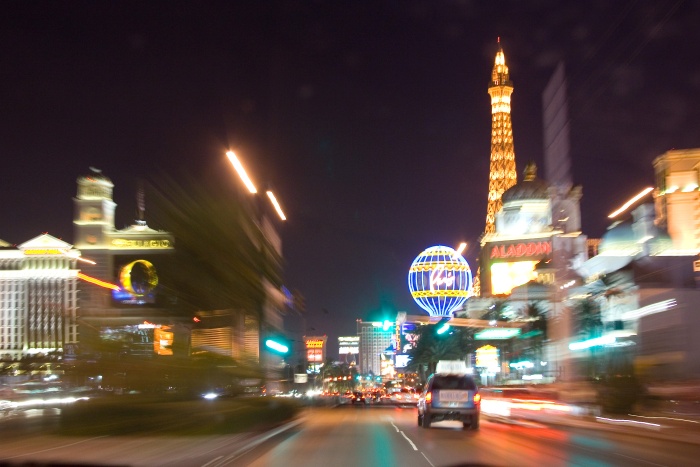
A Clinton-allied teachers' union files a law-suit against voting in the coming Democratic caucus in nine Vegas Strip hotels. It would hamper the Culinary workers in supporting Obama. The usual campaign hardball antics from the Clintons...see excerpts below
A lawsuit filed late Friday in federal court seeks to stop the Democratic Party from holding caucus meetings at nine Strip hotels, which would diminish the influence of casino workers and hamper Illinois Sen. Barack Obama’s campaign.
The Nevada State Education Association has not endorsed any candidate, Warne said.
The other plaintiffs are Dwayne Chesnut, John Cahill, Vicky and John Birkland, and Patricia Montgomery. Some of them were active backers of Sen. Dina Titus’ 2006 bid for governor. Titus, of Las Vegas, has endorsed Clinton. Mark Ferrario, the attorney who filed the lawsuit, would not comment on how he got the clients, other than to say they care about the fairness of the caucus process.
The complete story can be read @ Las Vegas Sun.
Courtesy of Andrew Sullivan
Clyburn May Back Obama

Rep. James Clyburn (D-SC), "the highest-ranking African-American in Congress, said he was rethinking his neutral stance in his state’s presidential primary out of disappointment at comments by Bill and Hillary Rodham Clinton that he saw as diminishing the historic role of civil rights activists," the New York Times reports.
"Clyburn, a veteran of the civil rights movement and a power in state Democratic politics, put himself on the sidelines more than a year ago to help secure an early primary for South Carolina, saying he wanted to encourage all candidates to take part. But he said recent remarks by the Clintons that he saw as distorting civil rights history could change his mind." Courtesy of Taegan Goddard's Political Wire
Mental Health Break
A charming short film that includes 100 people, banging a drum. From age one to 100:
">
">
Saturday, January 5, 2008
The Two Earthquakes

I’ve been through election nights that brought a political earthquake to the country. I’ve never been through an election night that brought two.
Barack Obama has won the Iowa caucuses. You’d have to have a heart of stone not to feel moved by this. An African-American man wins a closely fought campaign in a pivotal state. He beats two strong opponents, including the mighty Clinton machine. He does it in a system that favors rural voters. He does it by getting young voters to come out to the caucuses.
This is a huge moment. It’s one of those times when a movement that seemed ethereal and idealistic became a reality and took on political substance.
Iowa won’t settle the race, but the rest of the primary season is going to be colored by the glow of this result. Whatever their political affiliations, Americans are going to feel good about the Obama victory, which is a story of youth, possibility and unity through diversity — the primordial themes of the American experience.
And Americans are not going to want to see this stopped. When an African-American man is leading a juggernaut to the White House, do you want to be the one to stand up and say No?
Obama has achieved something remarkable. At first blush, his speeches are abstract, secular sermons of personal uplift — filled with disquisitions on the nature of hope and the contours of change.
He talks about erasing old categories like red and blue (and implicitly, black and white) and replacing them with new categories, of which the most important are new and old. He seems at first more preoccupied with changing thinking than changing legislation.
Yet over the course of his speeches and over the course of this campaign, he has persuaded many Iowans that there is substance here as well. He built a great organization and produced a tangible victory.
He’s made Hillary Clinton, with her wonkish, pragmatic approach to politics, seem uninspired. He’s made John Edwards, with his angry cries that “corporate greed is killing your children’s future,” seem old-fashioned. Edwards’s political career is probably over.
Obama is changing the tone of American liberalism, and maybe American politics, too.
On the Republican side...Read more of David Brooks @ NYT
Wednesday, December 12, 2007
Obama catches Clinton in New Hampshire

Barack Obama has chipped away at Hillary Clinton's lead in New Hampshire locking the Democrats in a statistical tie a month before the first presidential primary, according to a CNN/WMUR Poll released Wednesday.
Clinton has dropped 5 percentage points since a previous CNN/WMUR survey in November, while Obama has gained 8 percentage points, according to the poll conducted by the University of New Hampshire Survey Center. Clinton is now at 31 percent to Obama's 30 percent. New Hampshire's primary is set for January 8.
Clinton's 5-percentage point drop appears to have been largely due to the loss of support among women.
"Clinton's support among Democratic women in New Hampshire has dropped from 43 percent to 33 percent," said CNN Polling Director Keating Holland. "By contrast, her support among men dropped only 1 point to 27 percent in that same time period."
Clinton is still viewed by Democratic primary voters as having the most experience and the best chance of beating the Republican presidential nominee. But Obama is seen as more likable, more believable and more likely to unite the country.
Among Republicans, the poll reveals that despite Mike Huckabee's meteoric rise in some Iowa and national surveys, the former Arkansas governor has yet to catch fire in New Hampshire. Huckabee remains in single digits at 9 percent, up 4 percentage points from November. But he still trails ex-Massachusetts Gov. Mitt Romney by 23 percentage points.
Romney remains in the lead in New Hampshire with 32 percent, according to the poll, followed by former New York Mayor Rudy Giuliani and Sen. John McCain of Arizona who are tied with 19 percent. Read more @ CNN
Sunday, December 9, 2007
CLINTON NO LONGER SHOULD WORRY JUST ABOUT IOWA

From NBC's Chuck Todd, Mark Murray and Domenico Montanaro
With just 24 days to go before Iowa, it appears the race for the Democratic nomination is no longer a tight 1-state contest, but a truly competitive race across the country.
In three new MSNBC/McCLATCHY/Mason-Dixon polls of Iowa, New Hampshire and South Carolina, the national frontrunner, Hillary Clinton, leads in all three states but her lead is not outside the margin of error in any of those states. Her largest lead is three points, statistically insignificant. Her leading challenger, Barack Obama is nipping at her heels, trailing in Iowa by 2 points and trailing in New Hampshire and South Carolina by just three points.
John Edwards is a major factor in Iowa and South Carolina but trails badly in New Hampshire. Read on @ First Read it is an analysis of the day's political news, from the NBC News political unit.
Sunday, December 2, 2007
Huckabee, Obama now lead

Barack Obama has pulled ahead in the race for Iowa's Democratic presidential caucuses, while the party's national frontrunner Hillary Clinton has slipped to second in the leadoff nominating state, according to The Des Moines Register's new Iowa Poll.
The lead change appears after weeks of increasing criticism of Clinton by Obama and Edwards about her position on U.S. policy toward Iran and questions of her candor.
Meanwhile, Clinton has recently begun accusing Obama of inexperience and criticizing his proposal to expand health insurance coverage.
The poll shows what has continued to be a wide gap between the top three candidates and the remainder of the field. The telephone survey of 500 likely Democratic caucusgoers was conducted Nov. 25 to 28 and has a margin of error of plus or minus 4.4 percentage points.
Iowa City Democrat Katharyn Browne said she abandoned her support for Clinton in the past month and now supports Obama in light of the Iran issue.
Obama spent weeks in October and November attacking Clinton's support for a measure that allowed President Bush to declare the Iran's Revolutionary Guard a terrorist organization, a move Obama said was a step toward war. Clinton said the measure enhanced U.S. negotiating strength with Iran.
"An Iran war terrifies me," said Browne, a 30-year-old University of Iowa student.
Browne said she feels Obama is a more inspirational candidate than Clinton, despite the intensifying crossfire between them.
"I just think that Obama is more of a positive candidate overall," she said. "Aside from the Clinton-Obama interaction lately, it's nice to hear a candidate with a positive outlook. I think our country needs that right now."
Despite the movement, the race for 2008's opening nominating contest remains very competitive about a month before the Jan. 3 caucuses, just over half of likely caucusgoers who favor a candidate saying they could change their minds.
Obama, an Illinois senator, leads for the first time in the Register's poll as the choice of 28 percent of likely caucusgoers, up from 22 percent in October. Clinton, a New York senator, was the preferred candidate of 25 percent, down from 29 percent in the previous poll.
Former North Carolina Sen. John Edwards, who led in the Register's May poll, held steady with 23 percent, in third place, but part of the three-way battle. Read on @ Des Moines Register
Goodbye to All That

Is Iraq Vietnam? Who really won in 2000? Which side are you on in the culture wars? These questions have divided the Baby Boomers and distorted our politics. One candidate could transcend them.
The logic behind the candidacy of Barack Obama is not, in the end, about Barack Obama. It has little to do with his policy proposals, which are very close to his Democratic rivals’ and which, with a few exceptions, exist firmly within the conventions of our politics. It has little to do with Obama’s considerable skills as a conciliator, legislator, or even thinker. It has even less to do with his ideological pedigree or legal background or rhetorical skills. Yes, as the many profiles prove, he has considerable intelligence and not a little guile. But so do others, not least his formidably polished and practiced opponent Senator Hillary Clinton.
Obama, moreover, is no saint. He has flaws and tics: Often tired, sometimes crabby, intermittently solipsistic, he’s a surprisingly uneven campaigner.
A soaring rhetorical flourish one day is undercut by a lackluster debate performance the next. He is certainly not without self-regard. He has more experience in public life than his opponents want to acknowledge, but he has not spent much time in Washington and has never run a business. His lean physique, close-cropped hair, and stick-out ears can give the impression of a slightly pushy undergraduate. You can see why many of his friends and admirers have urged him to wait his turn. He could be president in five or nine years’ time—why the rush?
But he knows, and privately acknowledges, that the fundamental point of his candidacy is that it is happening now. In politics, timing matters. And the most persuasive case for Obama has less to do with him than with the moment he is meeting. The moment has been a long time coming, and it is the result of a confluence of events, from one traumatizing war in Southeast Asia to another in the most fractious country in the Middle East. The legacy is a cultural climate that stultifies our politics and corrupts our discourse.
Obama’s candidacy in this sense is a potentially transformational one. Unlike any of the other candidates, he could take America—finally—past the debilitating, self-perpetuating family quarrel of the Baby Boom generation that has long engulfed all of us. So much has happened in America in the past seven years, let alone the past 40, that we can be forgiven for focusing on the present and the immediate future. But it is only when you take several large steps back into the long past that the full logic of an Obama presidency stares directly—and uncomfortably—at you. To read more click Andrew Sullivan
Wednesday, November 21, 2007
Political Ideology

Tuesday, November 20, 2007
Former Aide Blames Bush for Leak Deceit

Former White House press secretary Scott McClellan blames President Bush and Vice President Dick Cheney for efforts to mislead the public about the role of White House aides in leaking the identity of a CIA operative.
In an excerpt from his forthcoming book, McClellan recounts the 2003 news conference in which he told reporters that aides Karl Rove and I. Lewis "Scooter" Libby were "not involved" in the leak involving operative Valerie Plame.
"There was one problem. It was not true," McClellan writes, according to a brief excerpt released Tuesday. "I had unknowingly passed along false information. And five of the highest-ranking officials in the administration were involved in my doing so: Rove, Libby, the vice president, the president's chief of staff and the president himself."
Bush's chief of staff at the time was Andrew Card.
The excerpt, posted on the Web site of publisher PublicAffairs, renews questions about what went on in the West Wing and how much Bush and Cheney knew about the leak. For years, it was McClellan's job to field _ and often duck _ those types of questions.
Now that he's spurring them, answers are equally hard to come by.
Read more @ Washington Post
Wednesday, November 7, 2007

Obama Makes The Post-Boomer Pitch

The candidate picks up and runs with the central thrust of this essay. Money quote from Obama:
"I think there's no doubt that we represent the kind of change that Senator Clinton can't deliver on and part of it is generational. Senator Clinton and others, they've been fighting some of the same fights since the '60's and it makes it very difficult for them to bring the country together to get things done."
From "Goodbye To All That":
A Giuliani-Clinton matchup, favored by the media elite, is a classic intragenerational struggle—with two deeply divisive and ruthless personalities ready to go to the brink. Giuliani represents that Nixonian disgust with anyone asking questions about, let alone actively protesting, a war. Clinton will always be, in the minds of so many, the young woman who gave the commencement address at Wellesley, who sat in on the Nixon implosion and who once disdained baking cookies. For some, her husband will always be the draft dodger who smoked pot and wouldn’t admit it. And however hard she tries, there is nothing Hillary Clinton can do about it. She and Giuliani are conscripts in their generation’s war. To their respective sides, they are war heroes...
The war today matters enormously. The war of the last generation? Not so much. If you are an American who yearns to finally get beyond the symbolic battles of the Boomer generation and face today’s actual problems, Obama may be your man.
Time will tell....
Friday, November 2, 2007
Argentina’s First Lady Elected President

Cristina Fernández de Kirchner, the wife of Argentina’s president, Néstor Kirchner, has become the first woman to be elected president in the country’s history, according to the latest official results published today.
Mrs. Kirchner, 54, the center-left Peronist party candidate and a senator, defeated a fractured opposition and avoided a runoff.
With 96 percent of the voting locations reporting, Mrs. Kirchner had 45 percent, ahead of Elisa Carrió, a center-left congresswoman, who had 23 percent, and Roberto Lavagna, a former finance minister, who had 17 percent, according to figures from the Ministry of Interior.
Mrs. Kirchner needed 45 percent of the vote outright, or 40 percent with at least a 10 percentage-point lead, to avoid a runoff.
Rival candidates accused her party of “theft” of ballots and other irregularities.
Mrs. Kirchner is the second woman to be elected leader of a South American nation in two years, after Michelle Bachelet, who became president of Chile last year. Read on @ New York Times
Wednesday, October 31, 2007
Subscribe to:
Posts (Atom)