Wednesday, February 27, 2008


20th Democratic Presidential Debate
 Chuck Todd: "Overall, it's hard to see this debate as changing the trajectory of this race; Obama was a bit more defensive tonight than last week and had more stumbles tonight than in more recent encounters... It's hard to pick a winner; Clinton was more prepared but Obama survived and that's probably the name of the game for him at this late date in the campaign."
Rick Klein: "That was an exhausting 90 minutes -- just to watch. Probably as close to a draw as you can imagine -- really, two very talented politicians and debaters fighting it out extremely closely."
Marc Ambinder: "Bottom line: did this, the 20th debate, change much? Probably not."
Mark Halperin: Obama B+, Clinton B-
Monday, February 25, 2008
RNC Secretly Polls on Racism, Sexism
 The Republican National Committee "has commissioned polling and focus groups to determine the boundaries of attacking a minority or female candidate," according to The Politico. "The secretive effort underscores the enormous risk senior GOP operatives see for a party often criticized for its insensitivity to minorities in campaigns dating back to the 1960s."
"The RNC project is viewed as so sensitive that those involved in the work were reluctant to discuss the findings in detail. But one Republican strategist, who asked that his name be withheld to speak candidly, said the research shows the daunting and delicate task ahead."
Sunday, February 24, 2008
What That McCain Article Didn’t Say

“If the point of the story was to allege that McCain had an affair with a lobbyist, we’d have owed readers more compelling evidence than the conviction of senior staff members,” he replied. “But that was not the point of the story. The point of the story was that he behaved in such a way that his close aides felt the relationship constituted reckless behavior and feared it would ruin his career.”
I think that ignores the scarlet elephant in the room. A newspaper cannot begin a story about the all-but-certain Republican presidential nominee with the suggestion of an extramarital affair with an attractive lobbyist 31 years his junior and expect readers to focus on anything other than what most of them did. And if a newspaper is going to suggest an improper sexual affair, whether editors think that is the central point or not, it owes readers more proof than The Times was able to provide.
The stakes are just too big. As the flamboyant Edwin Edwards of Louisiana once said, “The only way I can lose this election is if I’m caught in bed with either a dead girl or a live boy.”
The pity of it is that, without the sex, The Times was on to a good story. McCain, who was reprimanded by the Senate Ethics Committee in 1991 for exercising “poor judgment” by intervening with federal regulators on behalf of a corrupt savings and loan executive, recast himself as a crusader against special interests and the corrupting influence of money in politics. Yet he has continued to maintain complex relationships with lobbyists like Iseman, at whose request he wrote to the Federal Communications Commission to urge a speed-up on a decision affecting one of her clients.
Much of that story has been reported over the years, but it was still worth pulling together to help voters in 2008 better understand the John McCain who might be their next president. Read Clark Hoyt's entire commentary @ New York Times
Friday, February 22, 2008
Debate Reaction
 Some reactions from last night's debate in Texas between Sen. Hillary Clinton and Sen. Barack Obama:
Chuck Todd: "Clinton ended the debate on a VERY conciliatory note and for the first time sounded like a candidate who realized she might not win. It must be an odd position for her but the confidence she exuded for just about the entire debate disappeared there at the end. I wonder if showing some vulnerability might actually help her with some undecided voters."
Marc Ambinder: "This was the night where we all learned that Hillary Clinton understands the moment in history we are in, and that she is smart enough and gracious enough to realize that her party is more important than personal vanity, that there are things she just cannot say about Obama because it would hurt him in the fall, and that more likely than not, she will not win the nomination."
Rick Klein: "If all you're doing as a voter is making a judgment based on this debate, it's easy to come away supporting Clinton. But that's not how the election works -- the fact is Sen. Clinton was looking for ways to recast the debate tonight, and we didn't get that. A few new lines on a few old arguments do not result in any changed dynamics, not by my judgment. If you're an Obama fan, you're generally pleased with the night."
Walter Shapiro: "The very tentative guess is that Hillary Clinton still managed to inspire voters in Texas and Ohio to look again, perhaps for the last time, at the candidate whom they are poised to jettison in favor of Barack Obama."
Thursday, February 21, 2008
Obama Closing Gap in Texas, Ohio
 The latest ABC News/Washington Post poll takes a look at the two big March 4 primaries and finds Sen. Barack Obama within striking distance of Sen. Hillary Clinton in each.
Texas: Clinton 48%, Obama 47%
Ohio: Clinton 50%, Obama 43%
Key finding: "A quarter in Texas, and a third in Ohio, say they could change their minds or are undecided."
Complete survey results are available.
Wednesday, February 20, 2008
Barack Obama: Target engaged, two-front assaults
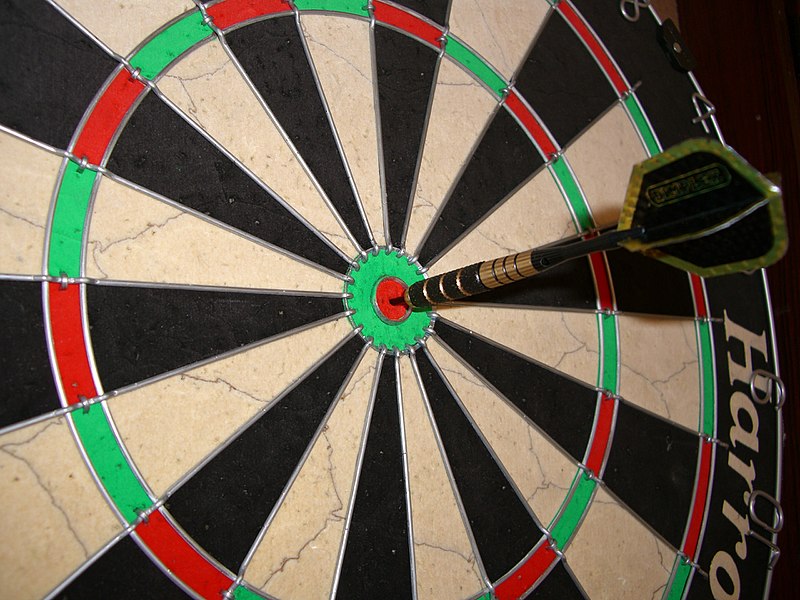 Sen. Barack Obama, fresh from 10 consecutive state election and caucus victories in his bid for the Democratic Party’s presidential nomination, has formally registered as Target No. 1.
Both his rival for the party’s nomination, Sen. Hillary Clinton, and the likely Republican candidate, Sen. John McCain, have taken square aim at the junior senator from Illinois as two of the biggest primaries of the season arrive – the votes in Ohio and Texas on March 4.
The attention of both Clinton and McCain demonstrates just how Obama has come from the town square in Springfield a little over one year ago when he amassed the first of many large crowds to respond to his calls of hope and change.
And the substantive material of the charges which both are leveling at Obama demonstrate just how strong he may be: They both are challenging his experience.
But it is, indeed, the experience of both Clinton and McCain which is causing many voters concern: Voters in both parties are looking at Clinton’s experience as a polarizing figure in American politics, and they are weighing that idea of Clinton II; conservative Republicans are looking at McCain’s experience in immigration reform, campaign finance reform and tax-cutting, and moderate to liberal Republicans are looking at his experience of support for the war and interrogation policies of an administration he long criticized for its conduct of both.
And, ultimately, voters in both parties are looking at Obama – slightly ahead in the Democratic delegate count, far ahead on the inspiration meter, and posing one ripe target for the Texas and Ohio elections which already are underway today with early voting in Texas. Read more of Mark Silva @ The Swamp
Obama Goes 10-0
 Obama goes 10-0: The best way to end two days of tough press coverage? You go out and win a contested state -- and a general election battleground, to boot -- by 17 points. That’s exactly what Obama did in Wisconsin yesterday, and when you add his victory late last night in Hawaii, he’s now an eye-popping 10-0 since February 5. What’s more, every single win after Super Tuesday has been in the double digits, the narrowest margin being last night’s 17-point win. Yes, Obama outspent Clinton in Wisconsin. Yes, he campaigned in the state longer than she did. And, yes, Madison is full of potential Obama base supporters: college students and highly educated adults. But demographically, Wisconsin was a perfect place for Clinton to stop Obama’s momentum. And she tried with negative TV ads (hitting Obama on health care, Social Security, and not participating in debates), mailings (slamming him on health care and his “present” votes), and a well-timed oppo hit (on Obama lifting lines from Deval Patrick’s speeches). And still, per the exit polls, Obama won among those who decided on Election Day (though it was closer), as well as in the last three days. There's an argument that some in the Clinton campaign can make that the negative stuff was just starting to work. Then again, it was a 17-point win...
Courtesy First Read
Monday, February 18, 2008

Sunday, February 17, 2008
Steadfast McCain ally sparks veep talk

Even through the McCain campaign’s darkest days in 2007, Minnesota Gov. Tim Pawlenty remained a steadfast ally to the Arizona senator in his bid for the Republican presidential nomination.
As a result, with John McCain as the clear GOP frontrunner and insider talk turning to speculation about his possible running mate, party insiders are now buzzing about the 47-year-old, second-term governor’s vice-presidential prospects.
“First of all, his age is attractive,” Weber says, hinting at the nearly quarter-century difference between his fellow Minnesotan and the 71-year-old McCain. “Second, he’s from outside Washington. Third, he represents a battleground part of the country. And he has a nice balance of, on one hand being totally acceptable to conservative wing of the party, especially to social conservatives, but at the same time sharing a couple of key maverick strains of thought with McCain.” Read more @ Politico
Oregon 2008 Presidential Election
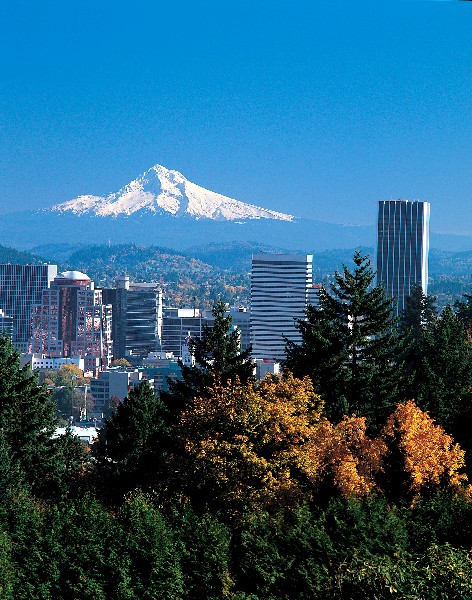 A poll of likely Oregon general election voters conducted on February 13 shows Senator Obama leading Senator McCain 49% to 40% and Senator McCain leading Senator Clinton 45% to 42%.
Obama is viewed favorably by 66% of likely Oregon voters and unfavorably by 31%.
McCain is viewed favorably by 56% and unfavorably by 42%.
Clinton is viewed favorably by 48% and unfavorably by 50%. Here are the details of Rasmussen Reports
Senior class politics
 Much has been made of how Barack Obama and Hillary Clinton would both be historic firsts as president. But so would John McCain: he’d be the oldest president ever inaugurated for a first term. McCain boosters, understandably, don’t shout about this from the roof tops. But there is reason to think based on the Republican primaries that he has special appeal to elderly voters in the way that Obama does to African-Americans and Clinton to women even if the effect is less pronounced in McCain's case.
McCain’s support among seniors might well grow in a general election match up with Obama. As Jonathan Alter points out in Newsweek, the age gap between the two of them would be the largest ever between the two major party nominees in a presidential election and given the youth triumphalism that there is on the periphery of the Obama campaign it is easy to imagine elderly voters gravitating towards McCain.
Encouragingly for the Republicans, four of the five states with the highest proportions of seniors are swing states. McCain’s age might turn out not to be a handicap but a crucial boon to his candidacy. See more of James Forsyth
Some Superdelegates See the Value of Waiting

As Illinois Sen. Barack Obama and New York Sen. Hillary Rodham Clinton scramble to woo superdelegates, some Democratic superdelegates say they have little incentive to choose sides early if the presidential nomination fight may not be decided until, or just before, the party’s convention in August.
“The power of the superdelegates at this point is to hold out,” said Rep. Marcy Kaptur , one of several Ohio lawmakers who has yet to make an endorsement with less than three weeks left before the March 4 Buckeye State primary.
“I’m going to hang loose,” said fellow Ohioan Tim Ryan .
Ryan and Kaptur are in good company sitting on the sidelines for a variety of reasons, including the personal political risks and rewards, leverage on an issue or set of issues, and undetermined personal preferences. Read more @ CQ Politics
Wednesday, February 13, 2008
Barack Obama on Iraq, Opposition from the Start
Do you suppose Hillary and John held these views? He separates himself between those two presidential candidates...now voters must choose.
The Beginning of the End?

First Read...Here's the math: For Clinton to overtake Obama for the pledged delegate lead -- which we think is the single most important statistic for the superdelegates to decide their vote -- she'll have to win 55% of the remaining delegates. Assuming next week goes Obama's way in Wisconsin and Hawaii, that percentage rises to 57%. Toss in likely Obama victories in Vermont, Wyoming, Mississippi, Oregon, Montana, and South Dakota, then Clinton's percentage need tops 60% of the remaining delegates available. And this is simply for her to regain the pledged delegate lead…
If Clinton were in the position Obama's in right now, how many folks would be writing Obama's obit?
Tuesday, February 12, 2008
The Real Magic Number is 1,627?
 In 2008, 3,253 delegates will be chosen through caucuses and primaries to represent Barack Obama or Hillary Clinton at the Democratic National Convention.
Once one of the candidates has won a majority of those democratically selected delegates (also known as pledged delegates), the only way his or her opponent could win the nomination is with the support of the 796 unelected, unaccountable superdelegates -- in the process overturning the judgment of the voters.
50%+1 of 3,253 is 1,627. That's the real magic number.
Once a candidate has 1,627 pledged delegates, he or she will win the nomination -- unless the superdelegates step in and reverse the decision of the voters.
At present, CNN estimates 986 pledged delegates for Obama and 924 for Clinton. (John Edwards also has 26.)
That means there are still 1,317 pledged delegates left to be awarded.
Obama must win at least 48.7% of them to hit his magic number.
Clinton must win 53.4% of the remaining delegates to her magic number. In other words, even if Clinton won 53% of the remaining delegates, she would still fall short of a democratically elected majority.
(The numbers aren't perfect mirrors of each other because John Edwards won 26 delegates.)
Later in the day, I'll post some graphs to make this easier to visualize, and tonight voters will select another 176 delegate. After those delegates are chosen, a full two-thirds of all delegates will have been picked.
Obama won the first contest in Iowa and as the calendar winds down, he has led wire-to-wire: from start to finish.
Will he be able to sustain the lead? No one can say for sure.
But one thing is clear right now: Barack Obama is winning.
Monday, February 11, 2008
OBAMA, THE DEMOCRATIC NOMINEE? YES HE CAN!

I believe that Barack Obama will defeat Hillary and win the Democratic nomination. I think that this weekend’s victories in states as diverse as Washington State, Louisiana, Nebraska, and Maine illustrates his national appeal and demonstrates Hillary’s inability to win in states without large immigrant and Latino populations.
Hillary’s results on Super Tuesday, which amounted to a draw with Obama, will be her high water mark and will represent the closest she will ever come to the party nomination.
Right now, CBS has Obama ahead in elected delegates with 1134, while Hillary has only 1131.By the time Virginia, Maryland, DC, Wisconsin, and Hawaii vote during the next week, Obama will have a lead over Clinton of about 100 delegates, even counting the super delegates who have thus far committed themselves.
March 4th will, at worst, be a wash for Obama with his probably wins in Ohio, Rhode Island and Vermont offsetting his probable defeat in Texas. (Although in Texas’ open primary, Republicans and Independents may flock to the Dem primary to beat Hillary).
And then come a list of states almost all of which should go for Obama, including likely victories in Pennsylvania, North Carolina, and Indiana. By the convention, he will have more than enough delegates to overcome the expected margins Hillary may rack up among super delegates.
And don’t bet on all the super delegates staying hitched to Hillary. These folks are politicians, half of them public office holders who are really good at reading the handwriting on the wall and really bad at gratitude for past favors.
Since 2004, I have predicted that Hillary Clinton would be the nominee. But, given the consistently amazing performance of Obama, his superior organizational and fund-raising skills, his inspiration of young people, and the flat and completely uninspiring performance by Hillary, it looks to me like it will be Obama as the Democratic nominee.
Courtesy Dick Morris
Probably the most prominent American political consultant, Dick Morris is almost universally credited with piloting Bill Clinton to a stunning comeback re-election victory in 1996 after the president lost Congress to the Republicans two years before. Morris has become a familiar figure as a commentator for the Fox News Channel. He makes over four hundred appearances each year and is well known for hard-hitting, nonpartisan, objective commentary about the U.S. political scene. He writes a weekly column for the New York Post and the Hill Magazine in the U.S. and the National Post in Canada.
Sunday, February 10, 2008
Obama Takes Maine!
 Illinois Sen. Barack Obama is the projected winner of Sunday’s Democratic presidential caucuses in Maine, according to the Associated Press and other media outlets. Obama dominated New York Sen. Hillary Rodham Clinton , sweeping all four states that held nominating events on the first weekend after “Super Tuesday.”
The Maine Democratic Party withheld its own call on the contest early Sunday night, in part to await results from the state’s population center of Portland. But the results released by the party so far suggest the projection is on the mark. Obama led Clinton by 59.47 percent to 39.93 percent, with nearly 95 percent of the precincts reporting in the presidential preference vote at caucuses held in 420 towns and cities around the state.
Subscribe to:
Posts (Atom)